

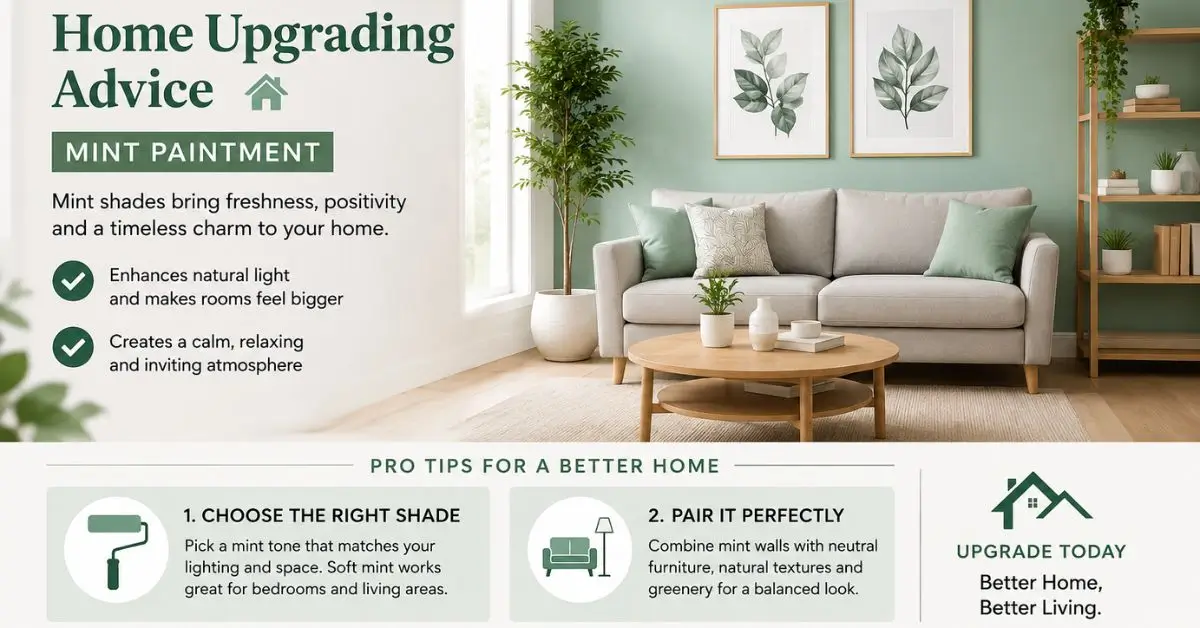
Home Upgrading Advice Mintpalment: Practical Improvements That Actually Make a Difference
Upgrading your home is one of those projects that starts with good intentions and often ends in decision paralysis. There are too many options, too many opinions about what matters, and very little honest guidance about which improvements actually deliver real value versus which ones just look appealing in a showroom or a renovation television program.
The home upgrading advice from mintpalment cuts through this confusion with grounded, practical guidance focused on improvements that genuinely improve daily life, protect your investment, and deliver visible results without requiring a renovation budget most homeowners do not have.
This guide covers the most impactful home upgrading advice organized by category and investment level, with honest context about what each improvement involves, what it realistically costs, and what difference it actually makes.
Home upgrading advice mintpalment refers to the practical home improvement guidance provided through the mintpalment platform, covering targeted upgrades that improve the comfort, functionality, aesthetics, and value of residential properties. This advice spans maintenance improvements, cosmetic upgrades, energy efficiency projects, and targeted renovations, with emphasis on practical execution and realistic outcomes rather than aspirational projects beyond most homeowners’ resources or capabilities.
Quick Summary
The best home upgrading advice from mintpalment focuses on improvements that deliver the most value per dollar spent. High-impact, low-cost upgrades include fresh paint, updated fixtures, improved lighting, and better organization. Medium-investment upgrades like kitchen hardware replacement, bathroom mirror updates, and smart thermostats deliver strong combined visual and functional improvement. This guide covers the full range with honest cost context.
The Mintpalment Approach: Value Over Volume
Before getting into specific upgrades, understanding the principle behind the mintpalment home upgrading approach clarifies why the advice works consistently.
Most home improvement guidance defaults to either one extreme or the other. Either it focuses on major renovations that require professional contractors and significant budgets, or it offers superficial tips that produce minimal visible improvement. Neither serves most homeowners well.
The mintpalment approach focuses on targeted, practical improvements that deliver disproportionate value relative to their cost and effort. The goal is not transforming your home from scratch. It is identifying the specific changes that produce the most meaningful improvement in how your home looks, functions, and feels in daily use.
This value-focused approach works because most homes have a small number of specific weaknesses that produce an outsized negative effect on the overall experience. Addressing those specific weaknesses produces more improvement than spreading the same budget across a dozen minor cosmetic changes.
High-Impact Upgrades Under $300
These improvements consistently deliver the most noticeable improvement per dollar spent. Start here before considering anything more expensive.
Fresh paint in the right rooms
A fresh coat of paint is among the highest-return home upgrades available. Faded, dirty, or dated wall colors immediately read as tired and neglected even in an otherwise well-maintained home. Painting the main living area and entry in a current, cohesive color scheme transforms how a home feels without changing anything structural.
The key is choosing colors that work with your existing furniture and flooring rather than colors you love in isolation. A warm neutral that complements what you have already invested in produces better results than a bold choice that forces other changes to work.
Cost: $50 to $150 in materials for a standard room. Completely DIY-accessible for most homeowners.
Update switch plates and outlet covers
Yellow, cracked, or mismatched switch plates and outlet covers are the kind of detail that registers as neglect even when people cannot identify exactly what bothers them about a room. Replacing them with consistent white or color-matched covers throughout the home costs $30 to $60 total and takes a screwdriver and an afternoon.
This is the kind of detail that the home upgrading advice mintpalment consistently identifies as dramatically underestimated in its visual impact per dollar spent.
Add or upgrade lighting
Poor lighting is one of the most consistent reasons rooms feel uninviting regardless of how well-furnished or decorated they are. Adding a floor lamp in a dark corner, replacing a dated ceiling fixture with a current design, or installing LED strips under kitchen cabinets addresses specific lighting failures that undermine the rest of the room.
Warm white LED bulbs throughout the main living areas, in the 2700K color temperature range, produce an immediate atmosphere improvement over cool or daylight-temperature bulbs at virtually no cost beyond the bulbs themselves.
Refresh hardware throughout the home
Cabinet pulls, door handles, and drawer knobs that are dated, mismatched, or low-quality are visible in every room of the home multiple times daily. Replacing cabinet hardware in the kitchen and bathrooms with consistent, current designs in a single finish costs $60 to $150 and takes an afternoon.
This is the single most consistent recommendation in mintpalment home upgrading advice because it delivers visible improvement across multiple rooms simultaneously for a modest combined investment.
Medium-Investment Upgrades: $300 to $1,500
Kitchen faucet replacement
A dated or low-quality kitchen faucet is one of the most touched fixtures in the home and one of the most visible in the primary workspace. Replacing it with a quality pull-down model in a brushed nickel or matte black finish updates the kitchen’s focal point significantly without the expense or disruption of a cabinet renovation.
A quality faucet from Delta, Moen, or Kohler in this price range runs $150 to $400. A confident DIYer can install it in two to three hours with basic plumbing tools.
Bathroom vanity light fixture replacement
The light fixture above the bathroom vanity affects both the function and the feel of the space more than almost any other element. Outdated Hollywood bulb strips or low-quality builder fixtures immediately date a bathroom regardless of other improvements. Replacing them with a current linear LED or contemporary bar fixture costs $80 to $250 and is typically a straightforward DIY installation.
Smart thermostat installation
A smart thermostat delivers both a visual upgrade to the most prominent wall-mounted device in the home and ongoing energy savings through intelligent scheduling. Models like the Google Nest or Ecobee pay for their $150 to $250 purchase price within one to two years through reduced energy consumption and provide the kind of modern convenience that adds genuine daily value.
Bathroom mirror replacement
The builder-grade mirror in most bathrooms is the element whose replacement produces the most dramatic visual change per dollar spent. Replacing it with a frameless oversized mirror, a well-framed design, or a backlit LED mirror transforms the room immediately. Cost runs $80 to $300 depending on size and style.
Closet organization system
Functional closet organization systems replace chaotic storage with structured, visible order that makes daily routines noticeably more efficient. A modular system from Elfa, ClosetMaid, or IKEA’s PAX range for a primary bedroom closet typically costs $200 to $600 and can be installed over a weekend.
Prioritization: Where to Start With Limited Budget
The home upgrading advice mintpalment provides consistently emphasizes prioritization because the order in which you tackle upgrades matters as much as which upgrades you choose.
| Priority Level | Focus Area | Why First |
|---|---|---|
| First | Deferred maintenance | Prevents damage from compounding |
| Second | Curb appeal basics | First impression affects perceived value |
| Third | Kitchen and bathroom updates | Highest-return rooms per dollar |
| Fourth | Energy efficiency upgrades | Ongoing savings that compound over time |
| Fifth | Cosmetic improvements | Maximum comfort and visual satisfaction |
| Last | Major renovations | Highest cost, longest disruption |
Addressing deferred maintenance before cosmetic improvements is the most consistent piece of advice across the mintpalment home upgrading guidance. A freshly painted room in a home with a failing roof or foundation moisture problems is money spent in the wrong sequence. Fix what is breaking before improving what is functional.
Larger Upgrades Worth Considering: $1,500 and Above
Exterior door replacement
The front door is the first element visitors see and the primary daily greeting for the people who live there. A worn, damaged, or dated front door creates a negative first impression that curbs appeal regardless of what improvements exist elsewhere. A quality fiberglass or steel entry door with updated hardware runs $800 to $2,500 installed.
Garage door replacement
For homes where the garage faces the street, the garage door can occupy up to 30 percent of the visible facade. An outdated or damaged garage door has an outsized negative effect on curb appeal. Replacement runs $1,000 to $2,500 for a quality insulated panel door and consistently delivers strong curb appeal improvement per dollar spent.
Kitchen countertop replacement
Replacing worn, dated, or damaged kitchen countertops in a material that suits the rest of the kitchen produces a significant visual upgrade without the disruption or cost of a full kitchen renovation. Quartz countertops run $50 to $100 per square foot installed, making a typical kitchen $2,500 to $5,000 depending on size and edge profile.
HVAC system replacement
For homes with aging heating and cooling systems, replacement with a high-efficiency modern system is an upgrade that pays for itself over time through reduced operating costs, improved comfort, and avoided emergency repair costs. This is also the upgrade most likely to be required rather than chosen, which is why including it in planned upgrade budgets before it fails is smarter than waiting.
Conclusion
The home upgrading advice from mintpalment consistently returns to a core principle. The most valuable home improvements are not the most expensive ones. They are the ones that address the most significant weaknesses in your specific home with the most appropriate level of investment.
Start with maintenance. Address the upgrades that produce the most daily improvement and the strongest return on investment before moving to larger or more cosmetic projects. Prioritize the rooms you use most. Build from a clear sense of what your home needs rather than what looks appealing in renovation media.
If this guide helped you identify where to start, take a look at our related articles on how to budget effectively for home improvement projects and the best high-return home upgrades before selling. Both give you the practical next steps for making smarter upgrade decisions throughout your home.
Frequently Asked Questions
What is home upgrading advice mintpalment?
It is practical home improvement guidance focused on targeted upgrades that deliver real value relative to cost, helping homeowners prioritize changes with the most meaningful impact on comfort, function, and property value.
What upgrades add the most value for the least money?
Fresh paint, updated cabinet hardware, consistent outlet covers, warm LED lighting, and a bathroom mirror replacement. Combined, these five changes typically cost under $400 and produce results that feel far more expensive.
Which upgrades should I do first?
Fix deferred maintenance and any water or structural issues first. Then focus on kitchen and bathroom updates for the strongest return. Energy efficiency upgrades like smart thermostats pay for themselves over time.
How much should I budget annually?
Budget one to two percent of your home’s value per year. For a $350,000 home, that is $3,500 to $7,000 annually, covering both maintenance and targeted improvements.
Can I do most upgrades myself?
Yes, most are DIY-friendly including painting, hardware, fixtures, and smart thermostats. Electrical, structural, roofing, and major plumbing work should always go to licensed professionals.
What upgrades are not worth the money?
Highly personalized improvements, over-improvements for the neighborhood, swimming pools in most US climates, and additions that push the home well above comparable properties in the area.