

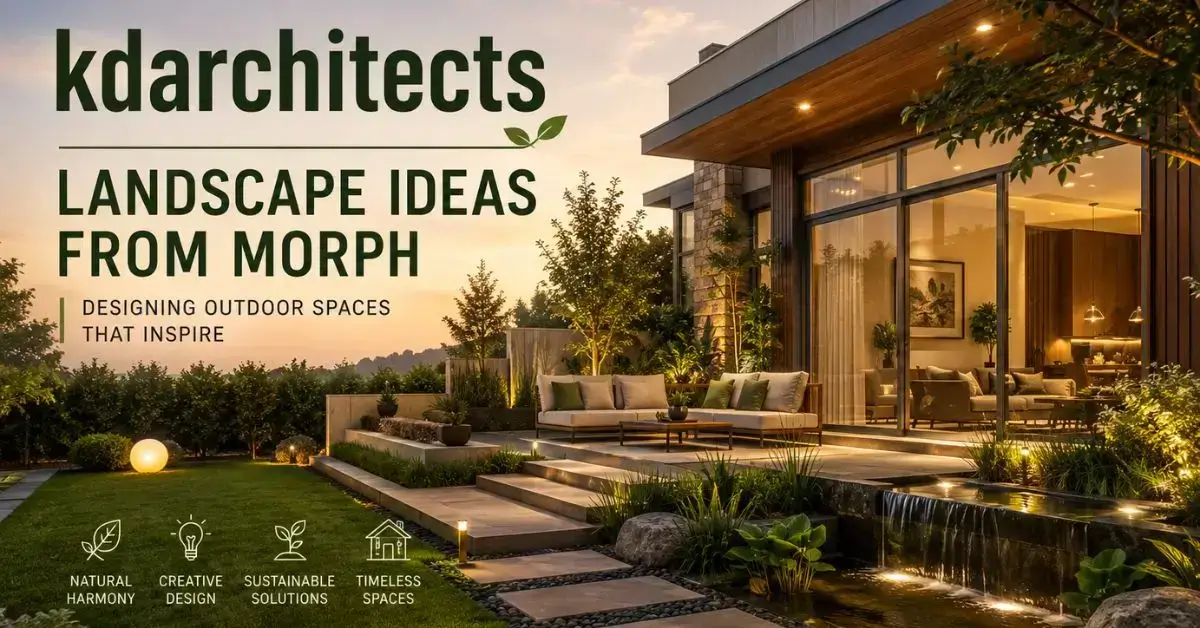
Introduction
Most homeowners underestimate their outdoor space. They focus nearly all of their home improvement energy indoors and treat the yard, garden, or surrounding land as a secondary concern. The result is a home that looks polished from the inside and unfinished from the outside, which is a significant missed opportunity considering that outdoor spaces are often the first thing anyone sees.
Professional landscape design firms like KD Architects, working with design tools and methodologies like Morph, approach outdoor spaces with the same level of intention and strategic thinking that interior designers bring to a living room. The ideas and principles they apply translate into landscapes that are not only beautiful but functional, sustainable, and genuinely connected to the homes they surround.
If you have come across kdarchitects landscape ideas from morph and want to understand what those concepts mean in practice, how professional landscape thinking actually works, and what ideas you can apply to your own outdoor space, this guide walks you through all of it clearly and practically.
KD Architects landscape ideas from Morph refer to the design concepts, spatial planning approaches, and landscape architecture principles developed or applied by KD Architects using Morph, a professional design and visualization platform. Together, they represent a methodology for creating outdoor spaces that balance aesthetic vision, environmental context, functional requirements, and long-term sustainability in residential and commercial settings.
Quick Summary
KD Architects and Morph bring professional-level landscape design thinking to outdoor spaces. This guide explains their core ideas, how landscape architecture principles work in practice, and what homeowners can take from this approach to improve their own yards and gardens.
What KD Architects Brings to Landscape Design
KD Architects operates in the architectural and landscape design space with a focus on creating environments that respond thoughtfully to their surroundings. Landscape architecture at this level is not about choosing plants and placing a few garden features. It is about understanding how a space functions, how people move through it, how it relates to the built structure it surrounds, and how it will evolve over time.
The firm’s approach to landscape design emphasizes the relationship between indoor and outdoor space. A well-designed landscape does not exist independently of the home it belongs to. It extends the home’s character into the surrounding environment, creates transitions between interior and exterior living, and responds to the specific climate, soil, and ecological context of its location.
This holistic thinking is what separates genuine landscape architecture from basic landscaping. When kdarchitects landscape ideas from morph inform a design project, the result is an outdoor space that has been thought through at every level rather than assembled from a catalog of popular features.
Understanding Morph as a Design Tool
Morph is a design and spatial planning platform used by architecture and landscape professionals to visualize, plan, and communicate design ideas. In the context of landscape design, it allows designers to model outdoor spaces in three dimensions, test different layouts, evaluate how light moves across a space at different times of day, and show clients what a proposed design will actually look like before any physical work begins.
This matters for homeowners because the visualization capability of tools like Morph changes how design decisions get made. Instead of approving a landscape plan based on a flat drawing or a written description, clients can see a realistic representation of what their outdoor space will look like with a specific pathway material, planting scheme, or water feature in place.
The ability to test ideas digitally before committing to physical installation reduces expensive mistakes and helps homeowners feel genuinely confident in the design choices being made. It also allows for meaningful collaboration between the designer and the client, because both parties are looking at the same visual representation of the proposed space.
Core Landscape Design Principles Behind the Approach
Whether you are working with a professional firm or approaching your own outdoor space independently, the principles that underpin kdarchitects landscape ideas from morph provide a useful framework for making better design decisions.
Spatial Organization and Flow
Every successful landscape begins with a clear understanding of how people will move through and use the space. This means identifying entry points, main pathways, destination areas like seating zones or gardens, and transition spaces between different parts of the property.
Poor spatial organization is one of the most common reasons outdoor spaces feel awkward despite having good individual elements. A beautiful garden that is difficult to reach, a patio that does not connect logically to the house, or pathways that lead nowhere create confusion and undermine the overall design.
Professional landscape architects map circulation before making almost any other decision. Where do people naturally walk? Where do they want to sit? Where do they need access for maintenance? These questions come first.
Layered Planting Design
Professional planting schemes are organized in layers that create visual depth and ecological resilience. The three main layers are the canopy layer of trees, the mid-layer of large shrubs and ornamental grasses, and the ground layer of perennials, groundcovers, and low-growing plants.
This layered approach creates a planting scheme that looks intentional and complete rather than sparse or randomly assembled. It also creates habitat for wildlife, manages rainfall more effectively, and reduces maintenance over time as plants fill in and support each other.
A practical example: a front yard in suburban Atlanta might use a single shade tree as the canopy layer, a grouping of native shrubs as the mid-layer, and a mix of coneflowers, black-eyed Susans, and ornamental grasses at the ground level. The result is a planting that looks professionally designed, supports local pollinators, and requires far less water and maintenance than a traditional lawn.
Material Selection and Hardscape Integration
The hard surfaces of a landscape, including pathways, patios, retaining walls, steps, and edging, define its structure and durability. Material choices affect both appearance and longevity, and the best landscape designs integrate hardscape and softscape in ways that feel cohesive rather than competing.
Natural stone, concrete pavers, gravel, timber, and brick each create different visual and functional outcomes. A flagstone pathway through a naturalistic garden feels very different from the same pathway built in poured concrete with clean geometric lines. Neither is wrong. Both need to match the overall design intention and the architectural character of the home.
Consistency in material selection across a landscape creates visual unity. Using the same stone for a pathway, a retaining wall, and a garden border creates a connected, professional look that a mixed material approach often fails to achieve.
Water Management and Sustainability
Professional landscape designers pay close attention to how water moves across and through a property. Poorly managed water runoff causes erosion, flooding, and plant loss. Well-designed water management improves plant health, reduces irrigation needs, and protects the structural integrity of hardscape elements.
Techniques like rain gardens, permeable paving, bioswales, and strategic grading direct rainfall where it is beneficial rather than letting it run off the property or pool in damaging locations. These approaches are increasingly relevant as climate variability affects rainfall patterns across the US.
Drought-tolerant and native planting schemes reduce irrigation requirements significantly. In states like California, Texas, and Arizona, water-wise landscaping is not just environmentally responsible. It is a meaningful cost saving over time.
Lighting Design for Outdoor Spaces
Landscape lighting extends the usability of outdoor spaces into the evening and adds significant visual impact. Professional lighting design for outdoor spaces follows the same layered logic as interior lighting, with ambient illumination, path lighting, and accent lighting working together.
Up-lighting on trees and architectural features creates drama and visual depth. Path lighting improves safety and guides movement. Ambient lighting over seating areas creates atmosphere for evening use.
LED landscape lighting has become the standard choice for most applications because of its energy efficiency, long lifespan, and the wide range of color temperatures available. Warm white lighting, around 2700 to 3000 Kelvin, works best for residential landscapes because it creates the inviting atmosphere that cold white lighting cannot achieve.
Translating Professional Ideas Into Real Home Improvements
The principles visible in kdarchitects landscape ideas from morph are not exclusively for high-budget professional projects. They translate directly into practical improvements that homeowners can make at different investment levels.
Start with a simple site analysis. Before spending money, spend time observing your outdoor space. Where does the sun hit at different times of day? Where does water collect after rain? Where do people naturally walk? This information shapes every good landscape decision.
Fix the structure before adding decoration. Address drainage issues, establish clear pathways, and define the edges of planting beds before worrying about what plants to use or what features to add. Structure comes first in professional landscape design for good reason.
Invest in a few quality plants rather than many cheap ones. A smaller number of well-chosen, appropriately sized plants installed properly will outperform a large number of inexpensive plants installed incorrectly every time. Quality over quantity is a consistent principle in professional planting design.
Use repetition to create unity. Repeating a specific plant, material, or design element across different parts of a landscape creates visual cohesion. Even a simple approach like planting the same ornamental grass in clusters at three different points along a border creates a sense of deliberate design.
Light one thing well before lighting everything. Start with a single well-placed landscape light, perhaps up-lighting a significant tree or illuminating a pathway, and observe how it changes the evening appearance of your outdoor space. Build from there rather than installing a large number of fixtures all at once.
Helpful Comparison: DIY vs. Professional Landscape Design Approaches
| Approach | Best For | Cost Range | Key Advantage | Main Limitation |
|---|---|---|---|---|
| Full Professional Design | Large or complex projects | $5,000 and up | Expert spatial planning and execution | Higher upfront investment |
| Design Consultation Only | Homeowners wanting guidance | $500 to $2,000 | Professional input without full service cost | Homeowner executes the work |
| Design Software Tools | Visual planners and DIYers | Free to $200/year | Visualize ideas before committing | Requires design knowledge to use well |
| Phased DIY Approach | Budget-conscious homeowners | Variable | Low cost, high personal involvement | Slower results, potential for mistakes |
| Landscaping Contractor | Installation without design | $1,000 to $10,000+ | Professional execution of a defined plan | No design strategy included |
Conclusion
The landscape ideas that emerge from professional practices like KD Architects, using visualization tools like Morph, represent a way of thinking about outdoor space that most homeowners have never been introduced to. It is not about expensive features or elaborate installations. It is about approaching an outdoor space with the same intentionality and strategic thinking that goes into designing a well-functioning interior.
Spatial organization, layered planting, thoughtful material selection, water management, and carefully placed lighting are the building blocks of every successful landscape, from a modest suburban backyard to a significant rural property.
The best outdoor spaces are built from a clear understanding of how the space will be used, what the surrounding environment requires, and what design principles create lasting beauty rather than short-lived visual impact.
If you want to explore these ideas further, check out our guide on how to create a low-maintenance native plant garden or our practical breakdown of outdoor lighting design for residential properties. Both offer the same grounded, applicable approach to landscape improvement that professional firms like KD Architects bring to their projects.
Frequently Asked Questions
What is KD Architects’ approach to landscape design?
KD Architects creates functional, sustainable outdoor spaces that blend with architecture, environment, and user needs.
What is Morph in landscape design?
Morph is a 3D design tool that helps architects visualize landscapes and present realistic project previews before construction.
How can I improve my landscape on a budget?
Start with cleanup, pathway edging, drainage fixes, and defined garden borders, then add plants in phases.
What plants are best for low-maintenance landscaping?
Native plants are the best choice because they require less water, maintenance, and care.
How important is outdoor lighting?
Outdoor lighting improves safety, highlights landscape features, and enhances curb appeal, especially at night.