

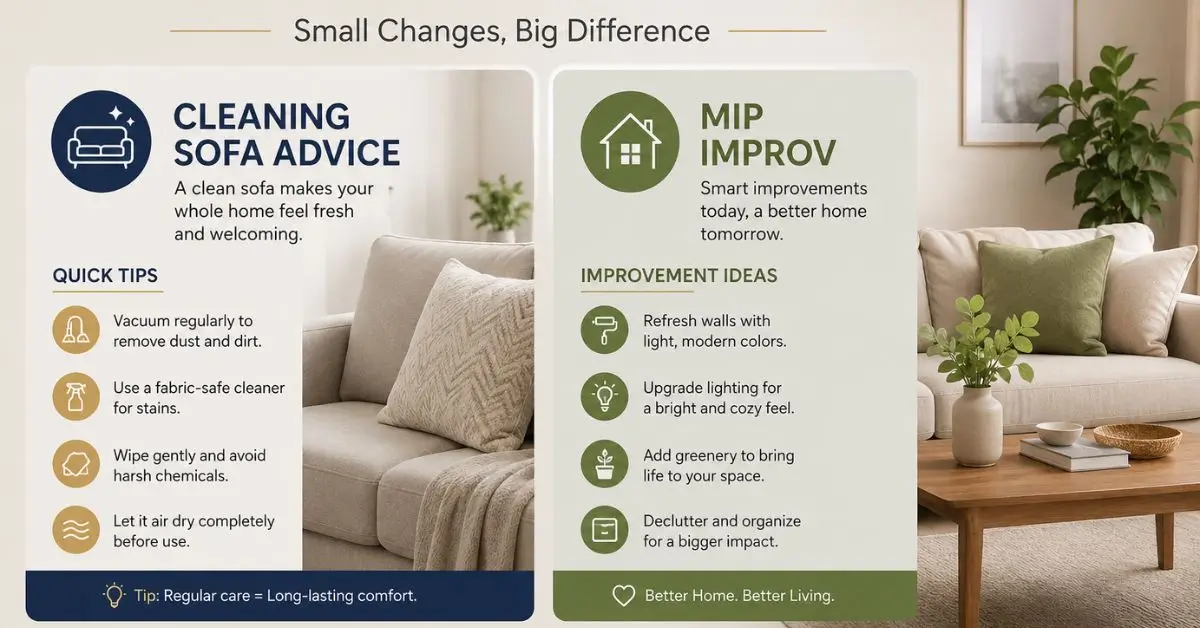
Cleaning Sofa Advice MipImprov: A Complete Practical Guide
A sofa is one of the most-used pieces of furniture in any home and one of the most neglected when it comes to regular cleaning. Most people wait until something spills or the fabric visibly looks dirty before addressing it, which is exactly when cleaning becomes harder, more expensive, and less effective.
The cleaning sofa advice from MipImprov takes a different approach. Rather than treating sofa cleaning as a crisis response, the guidance focuses on understanding your specific fabric, establishing routine maintenance habits, and knowing exactly how to handle both everyday dirt and specific stains before they become permanent.
This guide covers the complete sofa cleaning process from understanding your fabric’s cleaning requirements through stain removal techniques, routine maintenance schedules, and clear guidance on when professional cleaning is worth the investment.
“Cleaning sofa advice MipImprov” refers to the practical upholstery cleaning and maintenance guidance provided through the MipImprov home improvement platform. This covers fabric identification and cleaning code interpretation, routine maintenance techniques, stain removal methods for different spill types, product selection guidance, and professional cleaning recommendations that help homeowners keep their sofas clean, fresh, and in good condition without damaging the fabric or voiding furniture warranties.
Quick Summary
Cleaning your sofa properly starts with knowing your fabric type and its cleaning code. Regular vacuuming prevents buildup that causes permanent dirtiness. Most stains respond best to immediate blotting rather than rubbing. The right cleaning product depends entirely on your fabric. This guide covers every step from routine care to specific stain removal with honest guidance on what works and what to avoid.
Step One: Know Your Fabric Before Touching It With Anything
The most common sofa cleaning mistake is using the wrong cleaning method for the fabric. Water-based cleaners on leather crack it. Solvent cleaners on some synthetics discolor them. Steam cleaning on certain fabrics shrinks or distorts them permanently.
Before applying anything to your sofa, find the cleaning code tag. This is typically attached to the underside of a cushion or beneath the sofa frame itself. The cleaning codes are standardized and tell you exactly what cleaning approach is safe for your specific upholstery.
Cleaning Code W: Water-based cleaners are safe. This is the most flexible category and includes most synthetic fabrics.
Cleaning Code S: Solvent-based cleaners only. Do not use water on these fabrics, as it can cause water rings, shrinkage, or discoloration. Dry cleaning solvents are appropriate.
Cleaning Code WS: Both water-based and solvent-based cleaners are acceptable. This gives you the most cleaning options.
Clean code vacuum only. No liquid cleaners of any type. These fabrics are best maintained by a professional cleaner when liquid treatment is needed.
If you cannot find a cleaning code, or if the tag has worn off, treating the fabric as Code S until you can confirm otherwise is the safer approach. Test any cleaner on a hidden area first regardless of what the code indicates.
Understanding Your Sofa Fabric
Different materials require meaningfully different cleaning approaches. Here is what you need to know about the most common sofa fabrics.
Microfiber
Microfiber is one of the most popular and most cleanable sofa fabrics. Most microfiber sofas carry a Code W or WS rating. It responds well to mild dish soap and water solutions and dries relatively quickly. The main risk with microfiber is over-wetting, which can leave watermarks that are difficult to remove. Using a small amount of cleaning solution and drying quickly with a fan or low-heat hair dryer prevents this.
Cotton and Cotton Blends
Natural cotton upholstery can shrink or develop water rings if cleaned incorrectly. Many cotton sofas carry a Code S or WS rating. Steam cleaning is generally not recommended for 100 percent cotton without professional supervision. Dry cleaning or upholstery-specific cleaners with minimal water application produce the best results.
Linen
Linen is attractive but notoriously difficult to clean at home. It wrinkles easily, is prone to water marks, and can shrink significantly if over-wetted. Most linen sofas benefit from professional cleaning. For routine maintenance, gentle vacuuming and immediate dry-blotting of spills are the safest home approaches.
Velvet
Velvet requires very careful handling. Crushing the pile, which happens easily during cleaning, can cause permanent visible marks. Velvet sofas should be vacuumed with a soft brush attachment in the direction of the pile and spot cleaned carefully with a dry or barely damp cloth. Most velvet sofas benefit from professional cleaning for any significant staining.
Leather and Faux Leather
Genuine leather should not be cleaned with water-based household cleaners. Leather-specific cleaners followed by leather conditioner maintain both cleanliness and suppleness. Faux leather is generally more forgiving but also benefits from dedicated cleaners rather than general household products. Both benefit from regular conditioning to prevent cracking.
Polyester and Synthetic Blends
Synthetic fabrics are generally the most durable and easiest to clean. Most polyester blend sofas carry a Code W or WS rating and respond well to mild soap and water solutions. They also tend to be the most stain-resistant and the most forgiving of cleaning mistakes.
Routine Maintenance That Prevents Deep Cleaning
Cleaning sofa advice: MipImprov consistently emphasizes that regular maintenance prevents the build-up that eventually requires intensive cleaning. Here is the maintenance routine that makes a meaningful difference.
Weekly vacuuming
Vacuuming removes the surface dust, pet hair, crumbs, and debris that work their way into fabric fibers over time and cause permanent dullness and odor. Use the upholstery attachment with low to medium suction and cover all surfaces, including beneath cushions.
For velvet or delicate fabrics, use a soft brush attachment with very low suction and work in the direction of the pile.
Monthly cushion rotation
Rotating and flipping cushions monthly distributes wear evenly, prevents permanent compression marks, and reduces the visual difference between high and low-use areas of the sofa. This costs nothing and extends the visual lifespan of the sofa significantly.
Immediate spill response
The single most important maintenance habit is responding to spills immediately. The longer a spill sits in fabric, the more deeply it bonds with the fibers and the harder it becomes to remove fully. Keep paper towels or a clean white cloth nearby the sofa for an immediate response.
Annual deep clean
Even well-maintained sofas benefit from a thorough annual cleaning that addresses the accumulated oils, sweat, and embedded particulates that routine vacuuming cannot fully remove. Annual cleaning can be done at home for most fabric types or professionally for delicate or complex materials.
Stain-by-Stain Removal Guide
Coffee and tea stains
Blot immediately with a clean white cloth to remove as much liquid as possible before it sets. Do not rub. Mix one tablespoon of dish soap with two cups of cool water. Apply a small amount to the stain with a clean cloth using gentle dabbing motions from the outside of the stain inward. Rinse with a clean damp cloth and blot dry.
Red wine
Blot immediately. Salt can absorb remaining wine from fresh spills. After blotting, apply a mixture of one tablespoon dish soap, one tablespoon white vinegar, and two cups warm water. Work from the outside in. Club soda is also effective on fresh wine stains. For set wine stains, an enzyme-based upholstery cleaner is more effective than home mixtures.
Grease and oil
Apply a small amount of dry baking soda or cornstarch to the stain and allow it to sit for 15 to 20 minutes to absorb the oil. Vacuum away the powder. Then apply a small amount of dish soap directly to the stain and gently work it in with a damp cloth. Dish soap is effective on grease because it is designed to break down oils.
Pet accidents
Blot up as much of the urine as possible immediately with paper towels. Apply an enzyme-based cleaner designed specifically for pet urine. Enzyme cleaners break down the organic compounds in urine that cause both the stain and the persistent odor. Standard household cleaners mask odor temporarily but do not eliminate the compounds that cause it.
Ink
Apply isopropyl rubbing alcohol to a clean white cloth and dab gently at the ink mark. Do not rub, as this spreads the ink. Work from the outside of the mark inward. Ink is one of the more challenging stain types and may require multiple treatments. Test alcohol on a hidden area first, as it can affect some fabric dyes.
Chocolate
Allow chocolate to harden completely before attempting removal. Scrape off as much as possible with a dull edge. Then use a dish soap and water solution applied with a clean cloth using gentle dabbing motions. Warm chocolate that has been rubbed in is significantly harder to remove than hardened chocolate that has been scraped first.
DIY Sofa Cleaning Products That Work
| Product Type | Best For | Safe Fabrics | What to Avoid |
|---|---|---|---|
| Mild dish soap and water | General cleaning, coffee, wine | Most synthetics, microfiber, Code W | Leather, Code S fabrics |
| White vinegar and water | Odor removal, light stains | Most synthetics | Velvet, silk, natural fibers |
| Enzyme cleaner | Pet stains and odors | Most fabric types | Test first on all fabrics |
| Dry cleaning solvent | Code S fabrics | Specified Code S materials | Water-based fabrics |
| Baking soda | Odor absorption, dry treatment | All fabric types | N/A |
| Isopropyl alcohol | Ink stains | Most synthetics | Velvet, leather, silk |
| Leather cleaner | Genuine leather | Leather only | Fabric upholstery |
When to Call a Professional
Cleaning sofa advice: MipImprov is honest about the situations where professional upholstery cleaning produces better results than DIY approaches.
Professional cleaning makes sense when:
- The fabric carries a Code X cleaning code
- The sofa is velvet, silk, or antique fabric
- Large-area staining covers significant portions of the sofa
- Pet odor has become embedded despite enzyme treatment
- The sofa has not been cleaned in several years and has accumulated general dirtiness
- A DIY cleaning attempt has left water rings or discoloration
Professional upholstery cleaning in the US typically runs $75 to $150 for a standard sofa. This is worth the investment when the alternative is permanent damage from incorrect DIY cleaning or when the sofa’s value justifies professional care.
Conclusion
Cleaning a sofa well is not complicated, but it does require knowing your fabric, using the right products for that fabric, and developing the maintenance habits that prevent deep cleaning from being necessary as often.
The cleaning sofa advice from MipImprov consistently emphasizes preparation over reaction. Know your cleaning code before anything spills. Vacuum weekly before the build-up becomes embedded. Respond to spills immediately before they set. These habits are far more effective than the most sophisticated stain removal techniques applied to a stain that has already bonded with the fabric fibers.
If this guide helped you understand how to care for your specific sofa, take a look at our related articles on how to clean upholstered dining chairs and the best ways to protect light-colored furniture from stains. Both give you the practical next steps for keeping all the upho
Frequently Asked Questions
What is the best cleaning sofa advice MipImprov recommends?
Always check the cleaning code tag before applying any product. After confirming the code, regular vacuuming, immediate blotting of spills, and annual deep cleaning keep most sofas in good condition without professional help.
How do I find out my sofa’s fabric type?
Check the tag under the cushions or beneath the sofa frame. If there is no tag, contact the manufacturer with the model number or have a professional cleaner assess the fabric before you apply anything.
Can I use a steam cleaner on my sofa?
Only on Code W or WS synthetic fabrics. Never use steam on leather, silk, velvet, or Code S fabrics. Always test in a hidden area first regardless of the cleaning code.
How often should I professionally clean my sofa?
Every two to three years for average use. Households with children, pets, or light-colored sofas benefit from annual professional cleaning. Good home maintenance in between reduces how often professional treatment is needed.
What is the fastest way to remove a fresh stain?
Blot immediately with a clean white cloth. Do not rub. Then apply the right cleaner for your fabric type, working from the outside of the stain inward. Speed matters more than the product for fresh stains.
How do I remove sofa odor without washing it?
Sprinkle baking soda over the surface, leave for at least one hour, then vacuum. For pet odors, use an enzyme-based cleaner to break down odor-causing compounds that baking soda cannot reach.