

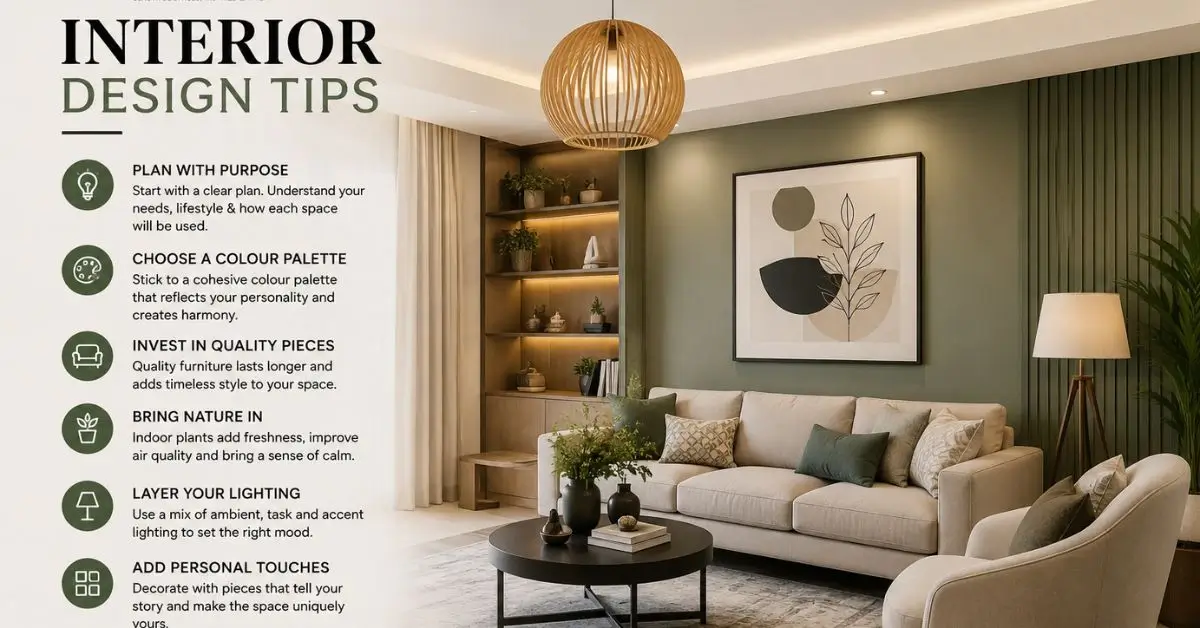
Interior Design Tips Mintpaldecor
Interior design looks straightforward from the outside. You choose furniture you like, pick colors that appeal to you, and add some accessories, and the room looks good. The reality is that most rooms decorated this way end up feeling slightly off in ways people sense but cannot identify. Something is wrong, but it is not obvious what.
The problem is rarely the individual pieces. It is the foundational decisions, proportion, lighting, color coherence, and spatial organization that determine whether a room feels intentional or accidental. Get these right and even modest furniture looks well-designed. Get them wrong, and expensive furniture looks out of place.
Interior design tips mintpaldecor addresses this directly with guidance focused on foundational decisions first and surface styling second. This guide covers those tips organized by room with practical implementation steps and honest context about cost and difficulty.
Interior design tips mintpaldecor refers to the practical interior design and home styling guidance from the mintpaldecor platform, covering color selection, lighting design, furniture arrangement, textile choices, and decorative styling by room. These tips focus on the design principles that consistently produce visually cohesive, comfortable spaces rather than product recommendations that become outdated with trends.
Quick Summary
The interior design tips from MintPalDecor prioritize foundational decisions: getting furniture scale right, layering warm lighting, creating color coherence, and establishing clear focal points. These decisions produce more visible improvement than any product purchase made without this foundation. This guide covers specific tips for every main room with honest implementation guidance.
The Mintpaldecor Design Philosophy
Before room-specific tips, understanding the principle behind the interior design tips mintpaldecor provides helps you apply each recommendation more effectively.
The approach is built on one consistent observation: the rooms that feel most designed are not the ones with the most carefully chosen products. They are the ones where the foundational decisions are correct. When proportion, lighting, and color coherence are right, everything placed in the room benefits from that foundation. When they are wrong, nothing placed in the room can rescue it.
This means the sequence of design decisions matters. Foundation before surface. Structure before styling. Editing what exists before adding what does not.
Every specific tip in this guide follows this sequence. Address the foundational issue in each room before reaching for styling solutions.
Living Room Design Tips
Identify and commit to one focal point
A living room without a clear focal point feels unresolved regardless of individual piece quality. The focal point is the element that draws the eye first and that furniture organizes around. Fireplace, media wall, large artwork, significant window. Choose one and arrange seating to face and relate to it.
The most common arrangement mistake is pushing furniture against walls to create more open floor space. This removes the conversational intimacy that makes a living room functional and creates an awkward empty center. Pull furniture into a grouping around the focal point.
Size the rug correctly before anything else
Interior design tips mintpaldecor consistently identify an incorrect rug size as the most damaging single mistake in living room design. A rug too small for the seating arrangement makes the entire composition look wrong, no matter the individual piece quality.
The front legs of all primary seating pieces should sit on the rug. Most US living rooms need a minimum 8 by 10 foot rug. When choosing between two sizes, take the larger.
Layer lighting with three sources
A single overhead light produces flat, institutional illumination that makes rooms feel like offices. A floor lamp in one corner, a table lamp on a side surface, and the overhead on a dimmer gives you a room that serves different purposes at different times.
This is the highest-return living room improvement available for $100 to $200 in quality lamp additions. No furniture purchase at this price produces comparable atmosphere improvement.
One large plant over several small ones
A single substantial plant, monstera, rubber tree, fiddle leaf fig, in the right corner adds organic texture and warmth that no manufactured accessory replicates. One large plant reads as designed. Several small plants scattered around reads as a collection that never cohered.
Bedroom Design Tips
Build outward from the bed
The bed is the functional and visual center of any bedroom. Quality bedding in a considered color, a headboard that gives the bed visual weight, and a bed sized appropriately for the room set the design foundation. Everything else works in relation to this decision.
High-quality cotton or linen bedding in a neutral tone creates the hotel-quality result most people want. This is one category where spending more produces a noticeably different result in both appearance and daily experience.
Hang curtains at ceiling height
Among the most impactful and least expensive interior design tips mintpaldecor offers: hang curtain rods close to the ceiling rather than at window frame height.
This makes ceilings feel taller, windows feel larger, and rooms feel more considered. The curtains cost the same. The rod costs the same. The visual result is dramatically different. This is a ten-minute change with a significant outcome.
Create visual symmetry on both sides of the bed
Matched or closely coordinated bedside tables with matched lamps create the visual balance that gives bedrooms their sense of calm. This does not require identical pieces, but it does require pieces that share scale, height, and visual weight. Asymmetry in a bedroom typically reads as unfinished rather than intentional.
Keep the color palette restrained
Bedrooms with multiple competing color families rarely feel restful. A dominant neutral, one secondary tone, and one accent used in bedding, textiles, and accessories create the coherence that supports rest. This is not limitation. It is the foundation of visual calm.
Kitchen Design Tips
Declutter counters completely before any styling
Kitchen counters accumulate gradually until they function primarily as storage. Before making any design decision, remove everything and replace only what is used daily. The visual improvement costs nothing and is often more significant than any purchase.
A kitchen where the counter is a work surface reads as intentional. One where it is storage reads as overwhelmed regardless of the quality of what is on it.
Replace cabinet hardware as a room-level update
Cabinet handles and knobs are touched dozens of times daily and are among the most visible elements in the kitchen. Outdated or low-quality hardware communicates neglect regardless of surrounding quality. Replacing all hardware consistently in a single current finish costs $60 to $150 and takes an afternoon. The reach of this change across every cabinet makes it among the highest-return kitchen improvements available.
Under-cabinet lighting serves function and atmosphere simultaneously
Interior design tips mintpaldecor identify improvements that address two problems at once as the highest priority. Under-cabinet LED strips improve task lighting during food preparation and transform the kitchen atmosphere in the evening. Plug-in options require no electrical work and cost $30 to $80 for most kitchens.
Style one surface deliberately
Rather than styling every kitchen surface, choose one visible counter area for deliberate treatment. A wooden cutting board, a small potted herb, and a ceramic oil vessel create a domestic still life that adds warmth without adding visual noise throughout the space.
Bathroom Design Tips
Replace the mirror as the primary bathroom upgrade
The builder-grade mirror in most bathrooms is the element whose replacement produces the most dramatic visual change per dollar available in the room. A frameless oversized mirror, a well-framed design in a complementary finish, or a backlit LED mirror transforms the bathroom’s character immediately.
The cost runs $80 to $250. Installation is basic wall mounting. The before-and-after visual difference is consistently the most significant of any single bathroom change.
Use a tray to create visual intention on the counter
A ceramic or marble tray containing hand soap, a small candle, and a simple plant creates a moment of deliberate styling in an otherwise functional space. Objects on a tray read as styled. The same objects without a tray read as accumulated. This $15 to $40 change has outsized visual impact.
Consistent towel presentation signals quality
Matched towels displayed consistently, folded on a bar or rolled in an open basket, add color, texture, and the sense of quality associated with well-maintained bathrooms. The cost is minimal, and the daily visual effect is immediate.
Design Tips Quick Reference
| Room | Best First Change | Cost | Visual Impact |
|---|---|---|---|
| Living Room | Layer three lighting sources | $100 to $200 | Very High |
| Living Room | Correctly sized rug | $150 to $400 | Very High |
| Bedroom | Ceiling-height curtains | $50 to $150 | High |
| Bedroom | Quality bedding | $80 to $200 | High |
| Kitchen | Counter declutter | $0 | Very High |
| Kitchen | Cabinet hardware replacement | $60 to $150 | High |
| Bathroom | Mirror replacement | $80 to $250 | Very High |
| Bathroom | Counter tray styling | $15 to $40 | Medium to High |
| All Rooms | Warm LED bulbs | $20 to $40 | High |
| All Rooms | Large statement plant | $30 to $80 | Medium to High |
Cross-Room Design Tips From Mintpaldecor
Build your color palette from pieces you already love
The most reliable path to cohesive color is identifying a color already present in something you love and building from there. Artwork, a rug, an upholstered chair. This produces naturally harmonious results that feel instinctively right rather than forced.
Warm bulbs throughout living spaces
Switching from cool or daylight-temperature bulbs to warm white in the 2700K range costs $20 to $40 per room and produces an immediate, dramatic atmosphere improvement. This is the lowest-cost interior design improvement with the widest visible impact.
Edit before adding in every room
The most consistent recommendation across interior design tips mintpaldecor is to remove before purchasing. Walk through each room and remove anything that does not contribute to the room’s purpose or character. What remains after this editing often reveals a better space that needs fewer additions than you expected.
Conclusion
The interior design tips from mintpaldecor consistently return to the same practical truth. The most impactful design decisions are almost never about specific products. They are about foundational decisions, proportion, lighting quality, color coherence, and spatial organization, that determine whether a room works or does not.
Start with the foundational decision that is most wrong in the room that bothers you most. Address it fully before moving to styling. That sequence, applied room by room, produces genuinely better spaces that improve daily life rather than a collection of purchases that never quite come together.
If this guide was useful, explore our related articles on how to choose interior paint colors for any lighting condition and the best low-cost home improvements with real visual impact. Both give you the practical next steps for continuing your interior design journey.
Frequently Asked Questions
What are Interior Design Tips MintPalDecor?
MintPalDecor shares practical tips on lighting, colors, furniture placement, and home styling to improve any space.
What is the most impactful interior design tip?
Layered warm lighting is one of the easiest ways to make a room feel more inviting and professionally designed.
How can I start interior design on a budget?
Rearrange furniture, switch to warm LED bulbs, and declutter. These simple changes create noticeable results with little cost.
How can I make a room look professionally designed?
Use a clear focal point, proper furniture layout, layered lighting, and a simple color palette.
What is the easiest high-impact design upgrade?
Replace cool bulbs with warm white LEDs (2700K). It’s affordable and instantly improves a room’s atmosphere.
How much should I budget for interior design updates?
Basic improvements can cost $100–$300 per room, while more complete updates may range from $300–$600 or more.