

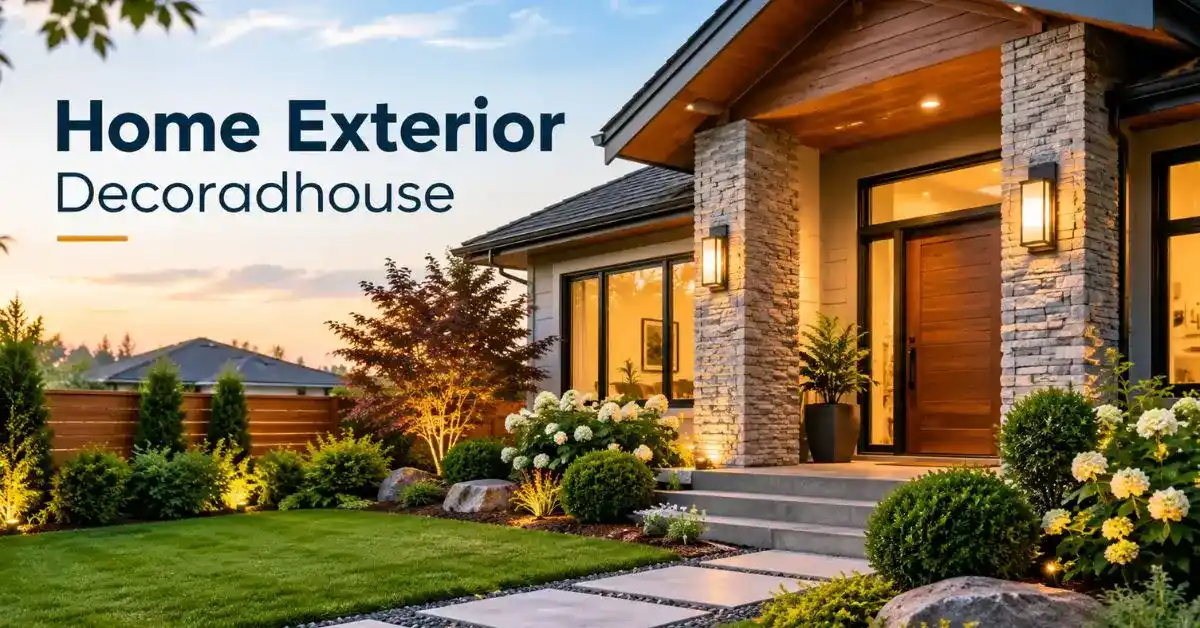
Home Exterior Decoradhouse: The Practical Guide to Upgrading Your Curb Appeal
The outside of your house is the very first thing your neighbors, guests, and potential buyers see. Yet, many homeowners feel stuck with faded paint, outdated porch lighting, overgrown shrubs, and worn pathways. When the exterior looks tired, the entire house can feel neglected, even if the inside is spotless and beautifully decorated.
Letting your outdoor facade fall behind lowers your property value and reduces your enjoyment of coming home each day. Learning how to style your home exterior decoradhouse gives you a clear system to refresh your property step by step. You do not need a massive construction loan to build an exterior that looks high-end and feels welcoming.
What is the core definition of this exterior approach?
The home exterior decoradhouse approach is a practical design methodology for enhancing curb appeal and architectural harmony. It focuses on combining durable exterior materials, coordinated color schemes, layered outdoor lighting, and balanced landscaping. This practical framework enables homeowners to elevate their property value and create an inviting entrance without spending tens of thousands of dollars on complete structural renovations.
Quick Summary
Transforming your home exterior starts with clean architectural lines, a balanced three-color palette, and an inviting front door. Focus on upgrading your house numbers, outdoor light fixtures, and entryway walkway before taking on major siding replacements. Applying the core principles of home exterior decoradhouse helps you create massive visual impact while protecting your renovation budget.
The Core Principles of Decoradhouse Exterior Design
Great exterior design is about creating visual balance from the curb to the front steps. When a house looks appealing, it is usually because all the elements work together in harmony rather than competing for attention.
The first rule is symmetry and visual weight. If your home has a large garage on the left side, you need to balance the right side with substantial landscaping, a prominent front porch, or bold window trim. Balancing these masses makes the house look anchored and intentional.
The second rule is establishing a clear focal point. The human eye naturally looks for where to enter a property. Your front door should always be the main star of your facade. You can achieve this by using an accent color, framing the door with matching light sconces, or designing a wide walkway that leads visitors straight to the entrance.
When you follow the home exterior decoradhouse system, you look at your property through a wide lens. You treat your siding, roofing, hardscape, and gardens as connected parts of a single outdoor room.
Mastering Exterior Color Palettes and Trim Harmony
Choosing exterior paint colors can feel intimidating because painting a house is a big commitment. The easiest way to get it right is to adapt the 60-30-10 color rule for outdoor surfaces.
text+-------------------------------------------------------------+
|              THE 60-30-10 EXTERIOR COLOR FORMULA            |
|                                                             |
|  60% Main Body Siding  --> Warm White, Greige, Navy, Taupe  |
|  30% Trim & Fascia     --> Crisp White, Charcoal, Black     |
|  10% Accent Features   --> Front Door, Shutters, Mailbox    |
+-------------------------------------------------------------+
The 60 Percent Main Body Siding
This color covers your primary siding, whether you have vinyl, fiber cement, brick, or stucco. Soft, natural tones work best in most neighborhoods. Warm whites, earthy greiges, muted slates, and rich olive greens blend well with natural outdoor surroundings and hold up well in bright sunlight.
The 30 Percent Trim and Architectural Details
Your secondary color defines your window frames, roof fascia, soffits, corner boards, and garage doors. A high-contrast trim color creates crisp, modern lines. For example, pairing warm white siding with dark charcoal trim creates a sharp, tailored look that makes architectural details stand out.
The 10 Percent Accent Color
Your accent color brings personality to your entryway. Reserve this vibrant or bold shade for your front entry door, decorative window shutters, and flower boxes. Colors like deep cranberry, rich navy, mustard yellow, or natural stained wood create an unforgettable entrance.
Using this disciplined color structure within home exterior decoradhouse keeps your home looking balanced and prevents the exterior from feeling chaotic.
Transforming the Front Porch and Entryway
Your front porch is the transition zone between the outside world and your private interior. A bare, poorly lit porch feels cold, while an overcrowded porch looks messy.
Upgrade the Front Door
If your existing door is in good physical shape, sand it down and apply two coats of high-grade exterior enamel in your accent color. If you want a modern upgrade, replace dated oval glass doors with a clean multi-lite craftsman door or a rich mahogany stained door.
Modernize Hardware and House Numbers
Replace tarnished builder-grade brass hardware with matte black or satin nickel handlesets. Mount modern, five-inch to seven-inch metal house numbers either horizontally above the door or vertically next to the frame. Make sure the numbers are easily visible from the street for delivery drivers and emergency services.
Layer Porch Planters and Greenery
Place a matching pair of tall planters on both sides of the front door to create formal symmetry. Use the thriller-filler-spiller planting technique by combining a tall evergreen (like an arborvitae or boxwood) with mid-height seasonal flowers and trailing English ivy.
Add Functional Seating
If your porch has enough space, add a classic wooden bench, a pair of Adirondack chairs, or a porch swing. Choose neutral cushions with weather-resistant outdoor fabrics to create a comfortable spot for morning coffee.
These focused porch adjustments represent the core of home exterior decoradhouse, turning basic entryways into warm, welcoming spaces.
Exterior Lighting for Safety, Warmth, and Style
Outdoor lighting serves two essential purposes: keeping your property secure at night and highlighting your home architectural features after the sun sets.
textTask & Entryway Lights (Wall Sconces, Overhead Lanterns)
       |
       v
Landscape & Path Lights (Low-Voltage Walkway Fixtures)
       |
       v
Architectural Accent Lights (Tree Uplights, Soffit Recessed LEDs)
Entryway and Wall Sconces
Replace small, dated carriage lights with fixtures that are properly scaled. Most homeowners buy sconces that are too small. Your front door sconces should measure roughly one-fourth to one-third the total height of the door. Position them at eye level (around 66 inches from the porch floor).
Low-Voltage Pathway Lighting
Line your primary walkway with low-voltage or reliable solar path lights. Space them six to eight feet apart in a subtle zigzag pattern rather than a straight airport runway line. This provides gentle, glare-free light that guides footsteps safely.
Landscape Uplighting and Wall Washing
Place directional spotlight fixtures at the base of mature trees or directed upward against textured brick or stone facade sections. Wall washing highlights architectural textures and creates dramatic shadows that make your home look stunning after dark.
Applying balanced illumination techniques is a key priority in home exterior decoradhouse, ensuring your home remains beautiful and secure twenty-four hours a day.
Exterior Project Comparison: Cost, Effort, and Impact
The table below outlines common exterior improvement projects to help you decide where to invest your renovation dollars first.
| Upgrade Project | Typical Cost Range | DIY Difficulty | Curb Appeal Impact |
|---|---|---|---|
| Front Door Paint & New Hardware | $80 to $220 | Easy | Very High |
| Modern House Numbers & Mailbox | $50 to $150 | Easy | Medium |
| Entryway Light Sconce Replacement | $100 to $300 | Easy to Medium | High |
| Low-Voltage Path Lighting Kit | $150 to $400 | Medium | High |
| Power Washing Siding & Driveway | $50 (DIY rental) to $250 | Easy | Very High |
| Foundation Shrub Planting | $200 to $600 | Medium | High |
| Complete Exterior Paint Job | $2,500 to $6,000 | Hard (Hire Pro) | Maximum |
Using this quick reference guide helps you pick high-impact, low-cost projects before committing to expensive contractor work.
A Realistic US Exterior Makeover Example
To see how these principles work on a real budget, consider a 1980s split-level home located in Raleigh, North Carolina.
The owners had a faded yellow vinyl exterior, an old polished brass porch light, and an overgrown holly bush that blocked the living room window. The property looked dated and blended into the background of the neighborhood.
Instead of spending $15,000 on brand-new siding, they applied home exterior decoradhouse strategies to complete a focused $1,400 weekend transformation:
- $80: Power washed the entire vinyl siding, concrete steps, and front walkway to remove years of green algae and dirt.
- $110: Painted the worn front door in a rich, welcoming navy blue semi-gloss exterior paint.
- $180: Swapped out the single old porch light for two modern 14-inch matte black gooseneck sconces.
- $90: Installed six-inch black floating metal house numbers and a matching wall-mounted mailbox.
- $420: Removed the overgrown holly bush and planted a layered bed of boxwoods, black-eyed Susans, and fresh dark hardwood mulch.
- $220: Installed an eight-piece low-voltage LED pathway lighting kit along the front stone walk.
- $300: Placed two cedar rocking chairs and a small side table on the front porch corner.
The transformation was immediate. The house went from looking neglected to looking like one of the most stylish properties on the street, all for less than a single mortgage payment.
This Raleigh example shows how practical home exterior decoradhouse upgrades deliver massive visual returns without major construction debt.
Honest Pros, Cons, and Material Limits
Every building material has strengths and weaknesses. Understanding these limits helps you avoid costly long-term maintenance mistakes.
Vinyl Siding
- Pros: Very affordable, low maintenance, never needs painting, and resists rot.
- Cons: Can crack in extreme freezing temperatures, melts if exposed to nearby grills, and offers limited color flexibility.
Fiber Cement Siding
- Pros: Extremely durable, fire-resistant, mimics natural wood grain beautifully, and holds paint for up to fifteen years.
- Cons: Heavy material that requires specialized cutting tools, professional installation, and higher upfront material costs.
Painting Exterior Brick
- Pros: Instantly modernizes dark, dated orange brick and creates a uniform facade.
- Cons: Permanent decision that cannot be easily reversed. Painted brick traps moisture if not sealed with breathable mineral paint, requiring repainting every seven to ten years.
Evaluating these material trade-offs within the home exterior decoradhouse framework ensures you choose products that match your local climate and maintenance lifestyle.
Hardscaping, Walkways, and Landscape Beds
Plants and walkways frame your home the same way a mat frames a piece of artwork. Messy garden borders and cracked paths detract from even the freshest paint job.
Widen Your Front Walkway
Standard builder walkways are often only thirty-six inches wide, forcing guests to walk in single file. If you are building or replacing a path, aim for forty-eight to sixty inches wide. This allows two people to walk comfortably side by side to your door.
Create Deep, Curved Garden Beds
Avoid skinny, straight garden beds that hug the foundation like a thin ribbon. Extend your landscape beds outward by six to eight feet, and introduce gentle, sweeping curves. This gives you room to layer low groundcovers in the front, mid-sized shrubs in the center, and taller ornamental trees in the back.
Edge and Mulch Cleanly
Crisp bed edges make any lawn look professionally managed. Use a flat edging spade to cut a three-inch vertical trench between your grass and garden beds. Fill the beds with natural brown or black shredded bark mulch to retain moisture and suppress weeds.
Following these hardscaping principles in your home exterior decoradhouse planning provides a clean, permanent foundation for your seasonal plants.
Common Exterior Mistakes to Avoid
Avoid these frequent decorating and landscaping errors to keep your property looking sharp:
- Choosing Undersized Fixtures: Tiny lights, tiny house numbers, and skinny porch columns make a home look cheap. When in doubt, scale up by twenty percent for exterior fixtures.
- Planting Too Close to the Foundation: Baby shrubs look small in pots, but they grow fast. Plant shrubs at least three to four feet away from your foundation to prevent root damage and protect siding from trapped moisture.
- Ignoring the Garage Door: The garage door often takes up thirty percent of your front facade. If it is dented or faded, paint it to match your main siding color so it blends into the background.
- Using Mismatched Light Bulb Colors: Mixing cool white 5000K bulbs in your porch sconces with warm 2700K bulbs in your landscape path lights creates a disjointed look. Stick to warm white bulbs (2700K to 3000K) for all exterior fixtures.
- Neglecting Gutter and Downspout Paint: Downspouts that run down the front of your house should be painted the exact same color as the siding behind them so they disappear visually.
Dodging these pitfalls while using home exterior decoradhouse strategies ensures your curb appeal project goes smoothly from day one.
Conclusion
Upgrading your home exterior does not have to involve overwhelming contractor fees or months of noisy construction. When you approach your outdoor facade with a structured plan, small cosmetic updates combine to create a stunning, welcoming appearance.
By applying these home exterior decoradhouse concepts, you can systematically boost your curb appeal, improve nighttime security, and build an entrance that fills you with pride every time you pull into the driveway. Choose one small project from this guide this weekend, gather your supplies, and start transforming your home from the outside in.
Frequently Asked Questions
What is the fastest way to improve curb appeal?
Power wash the exterior, repaint the front door, and update outdoor lighting. These simple upgrades can noticeably improve curb appeal in one weekend.
How do I choose the best exterior paint color?
Match your paint color to the undertones of permanent features such as the roof, brick, and stone. Test large samples outdoors before making a final choice.
How far apart should exterior walkway lights be?
Place walkway lights about 6–8 feet apart for balanced illumination. Staggering them on opposite sides helps reduce glare and creates a softer look.
Is it worth upgrading builder-grade porch columns?
Yes, upgrading thin porch columns with cedar or composite wraps can make the entrance look stronger and more custom. It is a relatively simple way to improve the home’s exterior appearance.
How often should I clean and inspect my home exterior?
Inspect and clean your home exterior twice a year, ideally in spring and fall. Check gutters, caulking, siding, and paint for signs of damage or moisture.