

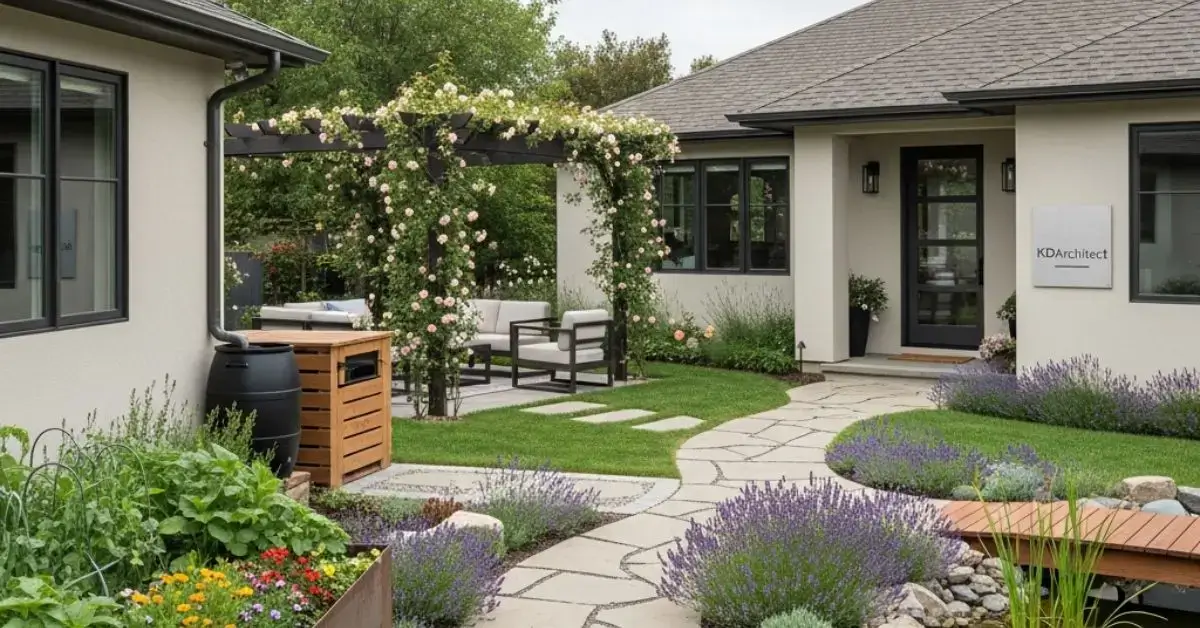
Ideas for Landscaping Kdarchistyle
A home’s landscaping is the first impression it makes and the last thing visitors see as they leave. It frames the architecture, defines the outdoor living space, and sets the tone for how the property feels from the street and from within. Done well, it transforms a house into a home with genuine character and curb appeal.
The challenge most homeowners face is that landscaping decisions feel overwhelming. There are too many plants, too many layout options, too many styles to choose from, and too little guidance on which choices actually work together cohesively rather than creating a random collection of garden elements that never quite feel intentional.
Ideas for landscaping kdarchistyle approach this challenge by connecting outdoor design to architectural principles, creating landscapes that feel like deliberate extensions of the home rather than afterthoughts. This guide covers the most practical and visually effective landscaping ideas organized by design category, with honest guidance on implementation, cost, and maintenance.
Ideas for landscaping kdarchistyle refer to outdoor design concepts and approaches that align landscape planning with architectural principles to create cohesive, visually intentional outdoor spaces. Rather than treating a garden as a separate decorative element, this approach considers how plant selection, layout, materials, and structural elements connect to the style, scale, and character of the home they surround. The result is a landscape that enhances architectural identity rather than competing with it.
Quick Summary
Landscaping ideas that align with your home’s architectural character produce more cohesive, attractive results than randomly selected garden elements. Key principles include matching landscape formality to architectural style, using plants to frame rather than obscure the home, selecting hardscape materials that complement exterior finishes, and designing for year-round visual interest. This guide covers practical ideas across all major design categories.
Why Architecture Should Guide Your Landscaping Decisions
Most landscaping mistakes come from choosing plants and features in isolation without considering how they relate to the home’s existing character. A formal garden in front of a casual farmhouse looks awkward. Tropical plantings around a traditional colonial create visual confusion. Informal cottage planting around a clean-lined contemporary home undermines the home’s architectural integrity.
The kdarchistyle approach to landscaping starts with the architecture and works outward. What style is the home? What materials define its exterior? What is its visual relationship with the street? The answers to these questions should guide every landscaping decision that follows, creating an outdoor space where home and garden feel like they belong together.
This architectural grounding does not limit creativity. It focuses on it. A garden designed in dialogue with its home’s architecture can be just as diverse and personally expressive as any other approach, while achieving a level of visual coherence that undirected planting rarely produces.
Front Yard Landscaping Ideas
The front yard defines how your home presents itself to the world. These ideas balance curb appeal with practicality.
Create a Clear Entry Sequence
One of the most impactful front yard landscaping ideas is establishing a clear visual path from the street to the front door. This entry sequence guides the eye and the visitor naturally, creating a sense of arrival that improves the experience of approaching the home.
This can be achieved with a defined pathway flanked by low plantings, a pair of matching plants at the entry point, a change in ground material from driveway to walkway, or a combination of these. The specific elements should match the home’s style: formal symmetry for traditional homes, flowing curves for casual styles, and clean geometry for contemporary architecture.
Frame the Home With Foundation Plantings
Foundation plantings, the shrubs and plants placed directly against the house, serve the practical purpose of softening the transition between building and ground while providing year-round visual interest.
The most common mistake with foundation planting is choosing plants that grow too large for their position. A shrub that reaches twelve feet at maturity planted beneath a window will eventually obscure it entirely. Select plants whose mature size fits the space they occupy, not their size at purchase.
For most homes, a combination of a few anchor plants with substantial visual weight and lower-growing fill plantings creates a balanced foundation that enhances rather than hides the architectural details it frames.
Define the Lawn Area With Clear Edges
A well-edged lawn looks three times as neat as the same lawn with undefined edges. Clean, defined borders between turf areas and planting beds create the visual order that makes a landscape feel intentional rather than overgrown.
This is one of the highest-value, lowest-cost improvements available in landscaping. A manual edging tool or a power edger applied consistently creates a sharp line that dramatically improves the overall appearance of any front yard regardless of plant selection or layout.
Backyard Landscaping Ideas
The backyard is where private outdoor living happens. These ideas create functional, beautiful spaces for daily enjoyment.
Establish Outdoor Rooms
The most satisfying backyards create distinct areas for different activities rather than presenting an undifferentiated open space. A seating area, a dining area, a play zone, a garden area, and a lawn for open use each occupy their own defined space within the overall yard.
Defining these rooms does not require construction. Planting, changes in ground material, low walls, or simply the arrangement of furniture can create the psychological sense of distinct spaces within a continuous landscape. This organizational principle transforms an unused backyard into a genuinely livable outdoor extension of the home.
Add a Focal Point
Every well-designed landscape has at least one focal point that draws the eye and anchors the composition. In a backyard, this might be a specimen tree, a water feature, a sculpture, a pergola, or a distinctive planting bed.
A focal point gives the eye somewhere to land and creates the sense of intention that separates a designed landscape from a random collection of plantings. It should be visible from the primary outdoor seating area and from the main view points inside the home.
Create Vertical Interest
Ground-level planting is only one layer of a complete landscape. Adding vertical interest through trees, tall shrubs, trellises with climbing plants, or garden structures creates the sense of depth and enclosure that makes a backyard feel like a place rather than just a surface.
Privacy screening is a practical bonus of vertical planting. A homeowner in Austin, Texas, who planted a screen of fast-growing native grasses along their back fence created both vertical interest and privacy from neighboring properties within two growing seasons at a significantly lower cost than a fence extension would have required.
Sustainable and Low-Maintenance Landscaping Ideas
| Approach | Benefit | Maintenance Level | Upfront Cost |
|---|---|---|---|
| Native plant planting | Climate-adapted, supports wildlife | Low once established | Low to medium |
| Mulched planting beds | Reduces weeds, retains moisture | Low | Low |
| Drip irrigation | Efficient water use, less disease | Very low | Medium |
| Permeable paving | Reduces runoff, sustainable | Very low | Medium to high |
| Lawn alternatives (groundcovers) | Less mowing, drought-tolerant | Low | Low to medium |
| Rain garden | Manages stormwater naturally | Low | Low to medium |
Sustainable landscaping reduces both maintenance burden and environmental impact. For homeowners in regions with water restrictions or drought conditions, native plant landscapes and drip irrigation are particularly valuable investments.
Hardscape Ideas That Complement Architecture
Hardscape, the non-plant elements of a landscape including pathways, patios, walls, and structures, is where architecture and landscape connect most directly. Material selection is critical.
Match Hardscape Materials to the Home’s Exterior
A brick home looks best with brick or complementary stone hardscape. A contemporary home with concrete and steel finishes suits clean concrete pavers or composite decking. A farmhouse or craftsman home works well with natural stone, wood, and gravel.
The relationship between exterior finishes and hardscape materials is one of the most important design decisions in landscape planning. Mismatched materials create visual discontinuity that no amount of beautiful planting can fully overcome.
Use Pathways to Create Flow
A pathway does more than provide a place to walk. It creates a visual line that guides movement through the landscape and establishes the pacing of the space. A straight path creates formality and directness. A gently curving path slows the visitor down and creates the sense of a journey through the garden.
The width of a path also matters. A path that is too narrow, under 36 inches for a primary path, feels cramped and diminishes the experience of moving through the space. A main garden path should be wide enough for two people to walk comfortably side by side.
Add Low Walls for Structure and Seating
Low retaining walls, garden walls, and seat walls add three-dimensional structure to a landscape that planting alone cannot provide. They create levels, define spaces, retain soil on sloping sites, and often double as informal seating that adds usable capacity to outdoor entertaining areas.
A low wall of 18 to 24 inches is the most practical height, creating a visible structure without blocking sightlines while also functioning comfortably as seating with or without added cushions.
Plant Selection Ideas That Work With Architecture
Match Plant Formality to Home Style
Formal homes, colonial, Georgian, and classical styles, suit symmetrical planting arrangements, topiary, boxwood hedges, and structured planting beds with clean lines. Informal homes, cottage, farmhouse, and craftsman styles suit loose, naturalistic planting with abundant flowers and less rigid structure. Contemporary homes suit bold architectural plants with strong form, grasses, agave, and large-leafed species that complement clean geometric architecture.
Layer Plants for Visual Depth
The most visually satisfying planting beds use multiple layers of plants at different heights. A tall background layer, a medium middle layer, and a low front layer create depth and visual interest that single-layer planting cannot match.
This layering principle applies regardless of the specific plants chosen. A layered bed of native plants looks equally intentional as a layered bed of traditional garden plants. The structure is what creates the sense of design.
Include Year-Round Interest
A landscape that looks beautiful in summer and bare in winter fails for six months of the year. Planning for year-round interest means including evergreen structure plants, plants with attractive winter form, early spring bloomers, and plants with decorative berries or bark that provide winter color.
This does not require enormous plant diversity. Four or five thoughtfully chosen plants that perform at different times of year create year-round interest more effectively than twenty plants that all peak simultaneously in July.
Conclusion
The best landscaping ideas are the ones that work with your home, your climate, your lifestyle, and your realistic maintenance capacity. Connecting those ideas to the architectural character of your home, as the kdarchistyle approach does, creates a coherence that generic landscaping advice cannot achieve.
Start with the principle that makes the most impact first. Define your entry sequence. Edge your lawn. Choose foundation plants of the right mature size. Then build from there as time and budget allow. Consistent, intentional improvement compounds over seasons in a way that transforms even modest gardens into genuinely beautiful outdoor spaces.
If this guide was helpful, explore our related articles on how to choose plants for your home’s architectural style and the best low-maintenance landscaping ideas for busy homeowners. Both give you the practical next steps for building on the foundation this guide provides.
Frequently Asked Questions
What are the best landscaping ideas for curb appeal?
A defined entry pathway, clean lawn edges, foundation plantings that frame the home, and one clear focal point make the biggest visual difference. Together they create an intentional, well-designed look from the street.
How do I choose plants for my home’s style?
Match planting formality to your architecture. Traditional homes suit structured, symmetrical planting. Farmhouse styles suit loose, natural gardens. Contemporary homes suit bold architectural plans with strong form.
What is the kdarchistyle approach to landscaping?
It connects landscape design to architectural principles, ensuring plants, materials, and layout complement the home’s character rather than conflicting with it.
How much does a landscaping project cost?
Basic DIY improvements like edging and mulching run $200 to $800. A full front yard redesign costs $3,000 to $8,000 professionally. Backyard projects range from $2,000 to $20,000 or more depending on scope.
What plants are lowest maintenance?
Native plants are the most reliable low-maintenance choice. Ornamental grasses, established shrubs, and groundcovers also require minimal upkeep once established.
How do I create privacy without a fence?
Use layered tall shrubs or small trees, particularly evergreen species, for year-round screening. Clumping bamboo and climbing plants on trellises also work well in narrower spaces.