

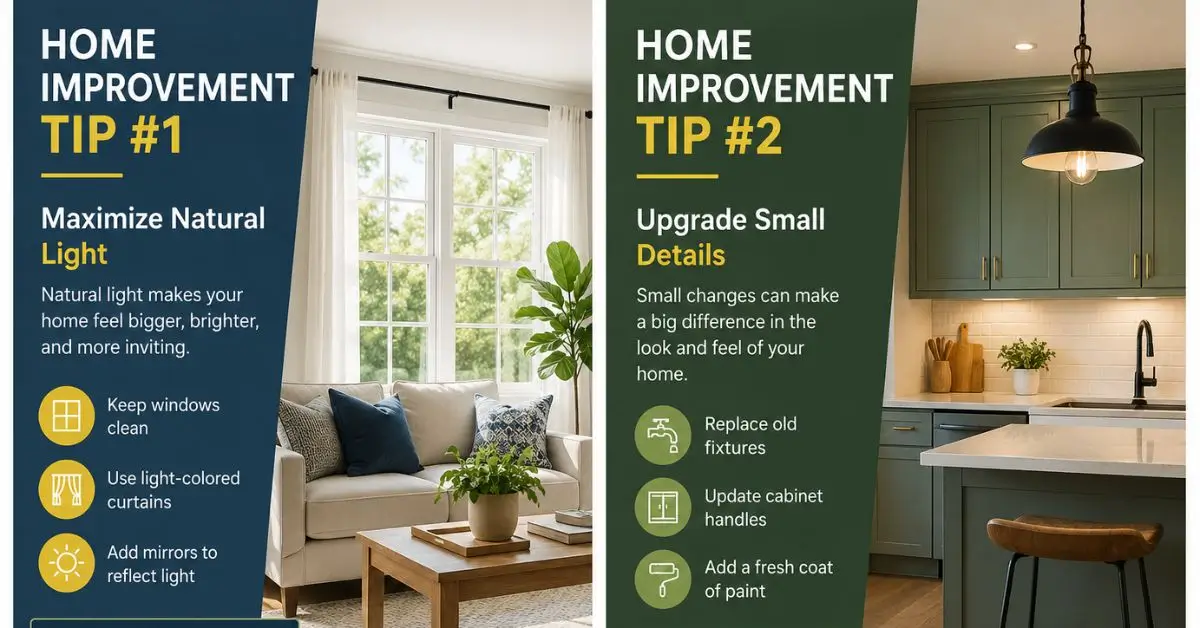
Home Improvement Tips Mipimprov
Most homeowners have a mental list of things they want to fix, update, or improve. The problem is rarely a lack of awareness. It is knowing where to start, what to prioritize, and how to approach each project without wasting money on the wrong things or hiring a professional for work you could confidently handle yourself.
The home improvement tips from mipimprov cut through this uncertainty with organized, practical guidance focused on what actually makes a difference. Not what looks impressive on a renovation show, but what improves daily life, protects your investment, and keeps your home functioning the way it should.
This guide covers the most valuable home improvement tips, organized by priority and home area, with honest context about what each improvement involves and what it will cost.
Home improvement tips mipimprov refers to the practical home maintenance and renovation guidance provided through the MIPIMPROV platform. This covers preventive maintenance, targeted upgrades, energy efficiency improvements, and DIY repair guidance that helps homeowners protect their property, reduce long-term costs, and improve daily comfort without unnecessary expense or complexity.
Quick Summary
The most impactful home improvement tips from MIPIMPROV combine proactive maintenance with smart, targeted upgrades. Start with the basics that protect your home and reduce costs, then work toward improvements that add comfort and value. This guide covers both categories with honest guidance on cost, difficulty, and expected outcomes.
Why Most Home Improvement Advice Misses the Mark
Before getting into specific tips, understanding why so much home improvement advice is less useful than it should be helps set the right expectations for what actually works.
Most online home improvement content falls into one of two traps. Either it focuses on high-glamour renovation projects like full kitchen remodels and bathroom overhauls that require significant budgets and professional help, or it offers tips so basic they add no real value to anyone who has owned a home for more than a year.
The home improvement tips from MIPIMPROV occupy the middle ground where most real homeowner needs exist. Practical improvements that are accessible without being obvious. Projects that genuinely improve how a home functions and feels without requiring a contractor or a significant renovation budget.
Maintenance Tips That Protect Your Investment
These are not glamorous, but they are the most financially important home improvement actions available to most homeowners. Deferred maintenance costs significantly more in reactive repair than proactive attention costs in prevention.
Change HVAC filters on a fixed schedule
This single habit has the broadest positive impact of any home maintenance action. A clean filter keeps the system running efficiently, extends compressor lifespan, and maintains indoor air quality. A dirty filter does the opposite on all three dimensions.
Set a recurring calendar reminder for every one to three months depending on your filter type and whether you have pets. Filters cost $5 to $20. An HVAC system replacement costs $5,000 to $15,000. The math on this habit is as clear as home improvement decisions get.
Inspect and refresh caulking annually
The caulk sealing your tubs, showers, sinks, windows, and exterior penetrations is the primary defense against water infiltration into the walls, subfloor, and structure of your home. Old caulk cracks and separates, creating pathways for water that causes damage invisible from the surface until it is severe.
An annual inspection takes fifteen minutes. Recaulking a bathtub takes an hour and costs under $10 in materials. The water damage that failed caulk enables can cost thousands in remediation. This is the highest-leverage maintenance action in any bathroom.
Clean gutters twice a year
Gutters exist to move water away from your foundation. When they are clogged, water overflows and pools against the foundation, increasing hydrostatic pressure and the risk of basement or crawlspace moisture infiltration. Cleaning them in late spring and late fall keeps them functional through the two primary periods when leaf debris causes clogging.
If climbing a ladder is not something you want to do yourself, professional gutter cleaning costs $100 to $250 and is money well spent relative to the foundation repair costs it prevents.
Test and maintain smoke and carbon monoxide detectors
Monthly testing takes thirty seconds per device. Annual battery replacement, regardless of the low-battery warning, costs under $5 per device. Replacing detectors on their recommended schedule, ten years for smoke, five to seven for CO, ensures the devices function when it matters.
This is one of the few home improvement actions that has immediate safety implications rather than just financial ones. Do not let it fall off the list.
Kitchen Improvement Tips
Install under-cabinet lighting
Under-cabinet lighting serves dual purposes that make it one of the best value kitchen improvements available. Functionally, it illuminates the work surface where food preparation happens, which is often in shadow when overhead lighting is the only source. Aesthetically, the warm glow across countertops creates a significantly more inviting kitchen atmosphere in the evening.
Plug-in LED strip lights cost $30 to $80 and install without electrical work. Hardwired options are cleaner but require a licensed electrician. Start with the plug-in version and upgrade later if you want a more permanent installation.
Upgrade cabinet hardware
Cabinet pulls and knobs are among the highest-impact per-dollar kitchen updates available. Replacing builder-grade hardware with quality pulls in a finish that coordinates with the kitchen’s fixtures takes two to three hours and costs $50 to $200 depending on how many cabinets you have.
The visual improvement is immediate and disproportionate to the investment. New hardware does not change the cabinets themselves, but it changes how the kitchen reads visually in a way that most visitors notice without identifying specifically what changed.
Deep clean the dishwasher and refrigerator coils
Both of these maintenance tasks improve appliance efficiency and extend appliance life. Running the dishwasher empty with a cup of white vinegar on the top rack followed by a cycle with baking soda removes buildup and odors. Vacuuming the refrigerator coils, located at the back or beneath the unit, removes the dust accumulation that forces the compressor to work harder than necessary.
Both tasks take under thirty minutes and cost nothing. They extend appliance lifespan in ways that justify the time investment clearly.
Bathroom Improvement Tips
Replace the toilet flapper
A running toilet is one of the most common and most ignored household water waste sources. A toilet that runs constantly wastes up to 200 gallons of water per day. The cause is almost always a worn flapper, the rubber seal at the bottom of the tank.
A replacement flapper costs $5 to $10 and takes five minutes to install without any tools. To test whether yours is leaking, add food coloring to the tank. If color appears in the bowl without flushing, the flapper needs replacing.
Upgrade the bathroom mirror
Replacing a standard builder-grade mirror with a properly framed or frameless full-width mirror changes the character of a bathroom dramatically for minimal investment. A frameless mirror creates visual expansion that makes small bathrooms feel significantly larger. A well-chosen framed mirror adds design intentionality that transforms the room’s aesthetic.
Cost runs from $80 to $300 depending on size and style. Installation typically takes one to two hours with basic wall-mounting skills. This is among the best visual return per dollar available in any bathroom upgrade.
Install a towel ladder or floating shelves
Bathroom storage that looks intentional rather than improvised improves both function and aesthetics simultaneously. A wooden towel ladder propped against the wall provides towel storage that looks like a design choice. Floating shelves above the toilet use otherwise wasted wall space for storage while adding visual interest.
Both options cost $30 to $100 and require minimal installation effort. They address the storage challenges most bathrooms face without the cost or disruption of built-in cabinetry.
Living Room and Bedroom Tips
Improve lighting with layered sources
A single overhead light is one of the most common reasons living rooms and bedrooms feel flat and uninviting. Layered lighting, a floor lamp, a table lamp, and overhead lighting on a dimmer allow the room to serve different needs at different times.
Swapping to warm bulbs in the 2700K range is the single cheapest lighting improvement available. A warm bulb costs $3 to $8 more than a standard cool-white option and immediately changes how a room feels in the evening. Combine this with a floor or table lamp in any corner that currently has no light source, and the transformation is significant.
Reorganize and reduce, then decorate
One of the most consistent home improvement findings is that most rooms benefit more from removing things than from adding them. A room that feels cluttered or disorganized does not need more furniture or more decor. It needs editing.
Before purchasing any new home decor items for a room, remove everything that does not belong in the space or that you would not miss if it were gone. What remains often reveals a better-organized, more cohesive space that required no additional investment.
Add a large area rug to define the seating area
In living rooms where furniture floats without a clear visual anchor, a large area rug brings the arrangement together and creates the sense of a defined space within a larger room. The most common mistake is choosing a rug that is too small. In most living rooms, front legs of all major seating pieces should sit on the rug.
An 8×10 foot rug suits most standard living rooms. Quality rugs that will hold up to daily use run $200 to $600. This is one of the single most impactful decor upgrades available in any living space.
Energy Efficiency Tips With Real Returns
| Improvement | Approximate Cost | Annual Savings Potential | Payback Period |
|---|---|---|---|
| Smart thermostat | $100 to $250 | $100 to $180 | 1 to 2 years |
| Attic insulation top-up | $500 to $1,500 | $150 to $400 | 2 to 5 years |
| LED bulb replacement | $30 to $80 | $50 to $100 | Under 1 year |
| Outlet and switch insulation | $10 to $20 | $30 to $60 | Under 1 year |
| Water heater blanket | $20 to $40 | $20 to $45 | Under 1 year |
| Weatherstripping refresh | $20 to $60 | $40 to $100 | Under 1 year |
These improvements share a common characteristic: they pay for themselves within a reasonable period and then continue generating savings indefinitely. Energy efficiency upgrades are among the only home improvements that produce ongoing financial return rather than simply adding value at resale.
Tips for Prioritizing When Budget Is Limited
The most important home improvement prioritization principle is addressing issues in order of consequence. Safety first. Water second. Energy third. Cosmetic last.
A failing smoke detector is higher priority than a bathroom update. A slow toilet leak is a higher priority than new kitchen hardware. A drafty door that is adding significantly to heating costs is a higher priority than a fresh coat of exterior paint.
Water damage is particularly worth prioritizing because it compounds invisibly. A leak that adds $30 per month to water bills also causes structural damage that builds over months before becoming visible. Addressing water issues promptly is always the right financial decision.
Conclusion
The home improvement tips from mipimprov work because they are grounded in how homes actually function and what makes the biggest practical difference for the people who live in them. Not what looks impressive in a before-and-after photo, but what genuinely improves daily life, protects the investment, and keeps costs from compounding through neglect.
Start with the maintenance habits. They are unglamorous and they work. Then work toward the targeted improvements that add comfort and value in the areas where you spend the most time. That sequence, applied consistently, produces genuinely better homes over time.
If this guide helped you identify where to focus your home improvement efforts, explore our related articles on building a seasonal home maintenance calendar and the best budget-friendly home upgrades with real value. Both give you the practical next steps for putting this guidance into consistent action.
Frequently Asked Questions
What are the best mipimprov home improvement tips?
Replace HVAC filters, clean gutters, refresh caulk, test toilet flappers, and install a smart thermostat to save money and avoid repairs.
How much should I budget yearly?
Save around 1–2% of your home’s value each year for maintenance and upgrades.
Which upgrades add the most value?
Kitchen updates, bathroom refreshes, paint, and landscaping usually give the best return.
What can I DIY?
Simple tasks like painting, caulking, filter changes, and fixture swaps are DIY-friendly. Major plumbing, roofing, gas, or electrical work should be done by professionals.
Which projects should come first?
Focus on safety, water damage, and energy efficiency before cosmetic upgrades.
What improvements reduce energy bills fast?
Switch to LED bulbs, seal drafts, replace weatherstripping, and lower water heater temperature to 120°F.