

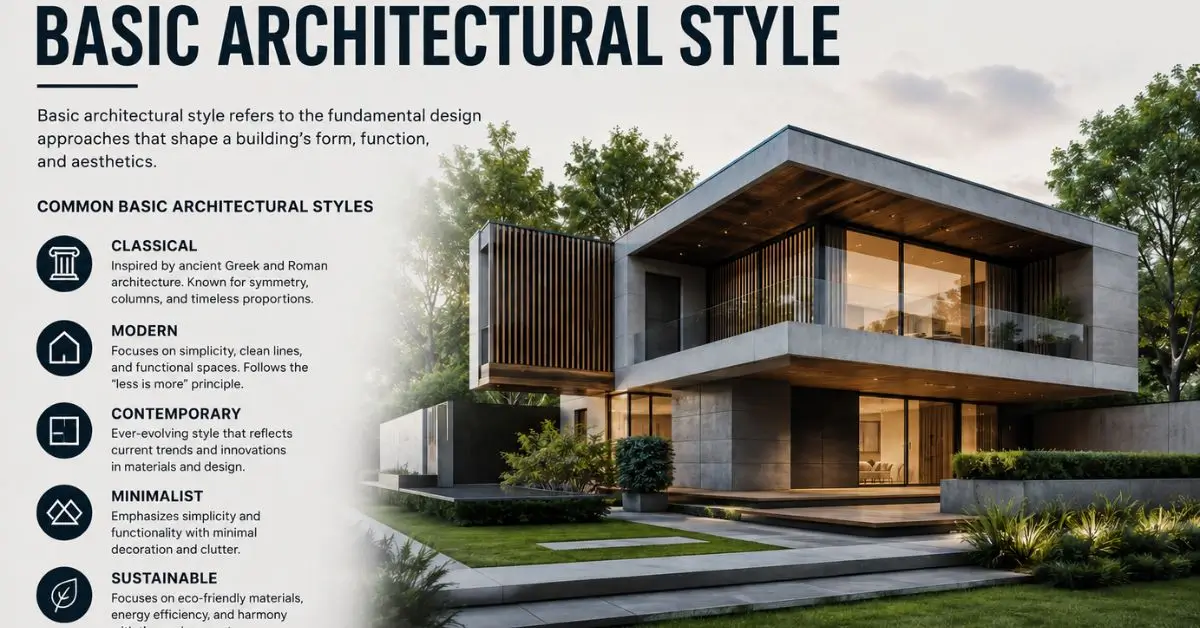
What Is Basic Architectural Style Kdarchistyle: A Complete Guide
When most people think about home design, they focus on what happens inside. Paint colors, countertops, bathroom tiles, and furniture. But the exterior is what defines a home’s identity from the moment someone sees it. The shape of the roof, the arrangement of windows, and the materials on the walls, these elements tell a story before anyone walks through the front door.
If you have searched for what is basic architectural style kdarchistyle is, you are probably trying to understand how homes are categorized by design, what makes one style different from another, and how this knowledge applies to real home improvement decisions.
This guide answers that question clearly. You will learn what the major architectural styles are, how to identify them, and how to use that understanding when planning renovations, additions, or new construction.
What is basic architectural style kdarchistyle? It refers to the foundational design language of a building, including its shape, roof type, materials, window arrangement, and decorative details, as organized and explained through the Kdarchistyle approach. This framework helps homeowners, designers, and enthusiasts identify, understand, and apply different residential architectural styles to real projects.
Quick Summary
Basic architectural style is the design identity of a building defined by its form, materials, and details. Kdarchistyle organizes and explains these styles in an accessible way. This guide covers the most important residential styles, what makes each one distinct, and how to apply that knowledge to home improvement decisions.
Why Architectural Style Matters for Homeowners
This is not just knowledge for architects. Homeowners who understand their home’s style make better decisions in several practical ways.
Renovation consistency
When you add a room, update a facade, or replace windows, keeping changes consistent with the existing style maintains visual harmony. A modern flat-roof addition on a Colonial home looks out of place. Understanding your style prevents these mismatches.
Resale value
Buyers respond to architectural coherence. A home where updates respect the original design tends to present better and hold value more reliably than one with random changes that ignore the original character.
Better communication with professionals
When you can name your home’s style and describe what you want in architectural terms, you communicate more effectively with contractors and designers. That clarity reduces misunderstandings and usually saves money.
Personal satisfaction
Knowing why your home looks the way it does and how to enhance it thoughtfully makes ownership more meaningful. It connects you to a design tradition with real history and purpose.
The Major Residential Architectural Styles Explained
Here are the foundational styles that most residential architecture falls into. Kdarchistyle organizes these styles in a way that makes them accessible to people without design training. Each one has distinct characteristics that become easy to spot once you know what to look for.
Colonial
Colonial architecture is one of the most enduring residential styles in America. It is defined by symmetrical facades, centered front doors with decorative surrounds, multi-pane double-hung windows in balanced rows, and simple rectangular floor plans.
Rooflines are typically side-gabled with moderate pitch. Exterior materials include brick or clapboard siding. Colonial homes feel formal and balanced. They are found across New England and the Mid-Atlantic states and remain popular in new construction because of their timeless, structured appearance.
Craftsman
The Craftsman style emerged in the early twentieth century as a reaction against industrial mass production. It emphasizes natural materials, handcrafted detail, and indoor-outdoor connection.
Key features include low-pitched gabled roofs with wide overhanging eaves, exposed rafter tails, front porches with tapered columns on stone or brick piers, and natural wood, stone, and brick in warm earth tones. Interiors typically have built-in cabinetry and open floor plans. Craftsman bungalows are common in California, the Pacific Northwest, and the Midwest.
Victorian
Victorian architecture covers a family of ornate styles from the second half of the nineteenth century. Defining characteristics include decorative complexity, asymmetrical facades, steep rooflines with multiple gables, ornate trim, and wrap-around porches.
Queen Anne is the most recognizable subtype, with patterned shingles and elaborate painted detail. Victorian homes require more maintenance than simpler styles but are valued for their visual richness and historic character.
Mid-Century Modern
Mid-Century Modern emerged from the 1940s through the 1960s and remains highly influential. It is defined by clean horizontal lines, flat or low-pitched roofs, large glass walls, open floor plans, and honest use of materials.
Structural elements are exposed rather than hidden behind applied decoration. These homes connect strongly to their landscape through large windows and overhanging roof planes. The style is common in California, Arizona, and Florida.
Mediterranean and Spanish Revival
Inspired by architecture from southern Spain and Italy, Mediterranean homes feature stucco exterior walls, red clay tile roofs, arched doorways and windows, wrought-iron details, and courtyard spaces.
This style thrives in warm, dry climates and is especially common in California, Florida, and the American Southwest. The thick stucco walls provide genuine climate benefits, keeping interiors cooler naturally.
Farmhouse
Traditional farmhouse architecture is practical and unpretentious. Large front porches, simple rectangular forms, steep pitched roofs, and board-and-batten or clapboard siding define the style.
The modern farmhouse version, with white painted exteriors, black window frames, and open living areas, has become one of the most requested styles in new US residential construction. It is versatile and works in both rural and suburban settings.
Contemporary
Contemporary architecture reflects current design thinking rather than a fixed historical period. It features clean geometry, flat or low-pitched roofs, large windows, open plans, and minimal exterior ornamentation.
Materials are often mixed, combining steel, glass, concrete, and wood. Contemporary homes prioritize energy efficiency and spatial flexibility. Quality contemporary design is always intentional in its material and spatial choices.
Cape Cod
The Cape Cod style originated in seventeenth-century New England. It features a steeply pitched gabled roof, symmetrical facade, central chimney, and simple rectangular plan.
Dormers are common additions that provide light and upper-floor space. The style is modest, efficient, and highly adaptable. Cape Cod homes are found throughout New England and have spread across the US as a practical, accessible housing form.
Comparing Architectural Styles at a Glance
| Style | Key Features | Common Materials | Typical Regions |
|---|---|---|---|
| Colonial | Symmetrical, centered door, double-hung windows | Brick, clapboard | New England, Mid-Atlantic |
| Craftsman | Wide eaves, tapered columns, front porch | Wood, stone, brick | California, Pacific Northwest |
| Victorian | Asymmetrical, ornate trim, steep rooflines | Wood, decorative shingles | Older urban neighborhoods |
| Mid-Century Modern | Flat roof, large glass, horizontal lines | Glass, steel, wood | California, Florida, Arizona |
| Mediterranean | Stucco walls, tile roof, arched openings | Stucco, clay tile | California, Florida, Southwest |
| Farmhouse | Front porch, steep roof, simple form | Wood siding, metal roof | Rural and suburban nationwide |
| Contemporary | Clean geometry, mixed materials, minimal trim | Steel, glass, concrete | Nationwide |
| Cape Cod | Steep gable, dormers, symmetrical facade | Wood shingles, clapboard | New England and nationwide |
How Kdarchistyle Makes Architectural Knowledge Accessible
One of the reasons people search for what is basic architectural style kdarchistyle is because the platform takes complex design knowledge and presents it in a way anyone can understand, regardless of their design background.
Rather than using heavy academic language, the Kdarchistyle approach organizes styles by their visual characteristics, making identification practical rather than theoretical. For homeowners, this means you can look at your own house and identify what style tradition it belongs to without needing formal training.
The platform helps homeowners understand not just what a style is but also what it means for practical decisions. What materials are appropriate for your style? What kind of addition would look right on your home? What details should you preserve versus update? These are the questions. Kdarchistyle helps answer the question.
How to Identify Your Home’s Architectural Style
If you want to figure out what style your own home is, here is a practical step-by-step approach.
Look at the roofline first
The roof shape is one of the clearest style indicators. A steeply pitched gable points toward colonial, Cape Cod, or Victorian. A flat or very low roof suggests modern or contemporary. A moderate hip roof is common in traditional styles. Clay tile on stucco means Mediterranean.
Check facade symmetry
Symmetrical facades with centered entrances are colonial or traditional. Asymmetrical facades with complex rooflines suggest Victorian or Craftsman. Clean horizontal compositions without decoration point toward modern or contemporary.
Examine the entrance and porch
A wide porch with tapered columns is a Craftsman. A formal columned entry is colonial. No porch with a recessed glass entry is contemporary. Arched openings with a covered loggia indicate the Mediterranean.
Note the exterior materials
Natural wood and stone in warm tones indicate Craftsman. White-painted wood or formal brick is Colonial. Stucco and tile are Mediterranean. Mixed modern materials with exposed structure suggest contemporary.
Choosing a Style for a New Project
If you are planning a new build or major renovation, choosing the right architectural style involves several practical considerations.
Climate compatibility
Mediterranean and Spanish Revival make practical sense in warm, dry climates. Colonial and Cape Cod were designed for colder regions. Mid-Century Modern homes with large glass work beautifully in mild climates but are energy-intensive in temperature extremes.
Neighborhood context
A home wildly out of character with its surroundings can feel jarring and may face HOA or planning restrictions. Choosing a style that complements nearby architecture creates visual harmony that benefits everyone.
Maintenance reality
Victorian and Craftsman homes require more upkeep than simpler styles. Ornate trim and complex rooflines need regular attention. Farmhouse and contemporary styles tend to be simpler to maintain over time.
Market appeal
Craftsman, farmhouse, colonial, and contemporary styles have broad appeal in most US markets. Very specific or unusual styles can make resale harder in conventional neighborhoods.
A homeowner in Austin, Texas, building a new home might choose a contemporary or modern farmhouse style that suits the warm climate, fits the city’s design-forward character, and appeals to the local real estate market.
Conclusion
Understanding what is basic architectural style kdarchistyle is practical knowledge that makes you a more informed homeowner. It helps you plan renovations that respect your home’s character, communicate clearly with design professionals, and make confident decisions about one of your biggest investments.
Whether you are identifying your current home’s style, planning changes that honor its design tradition, or choosing a style for something entirely new, this foundation of knowledge gives every decision a clearer framework.
If this guide was helpful, explore our related articles on how to plan a renovation that matches your architectural style and choosing exterior materials for different home designs. Both give you practical next steps for putting this knowledge to work on your own property.
Frequently Asked Questions
What is basic architectural style kdarchistyle?
It refers to the foundational design identity of buildings organized through the Kdarchistyle approach, covering major styles like Colonial, Craftsman, Victorian, Modern, and Mediterranean through visual characteristics and practical application.
What are the most common home architectural styles in the US?
Colonial, Craftsman, Victorian, Ranch, Cape Cod, Mediterranean, Mid-Century Modern, and Farmhouse. Regional preferences vary, with Mediterranean common in warm states and colonial predominant across the Northeast.
How do I identify my home’s architectural style?
Check the roofline, facade symmetry, porch design, and exterior materials. Symmetrical facades suggest colonialism. Wide eaves and tapered columns indicate Craftsman. Ornate asymmetrical facades point to Victorian. Flat roofs and large glass suggest modernity.
Does architectural style affect home value?
Yes. Renovations that respect the original style support value. Homes with consistent architectural character in established neighborhoods often command price premiums compared to those with mismatched updates.
Can I mix architectural styles when renovating?
Yes, but carefully. Borrowing compatible elements works better than combining completely different styles. A craftsman with restrained modern updates can work well. A Victorian with a flat-roof addition usually creates visual conflict.