

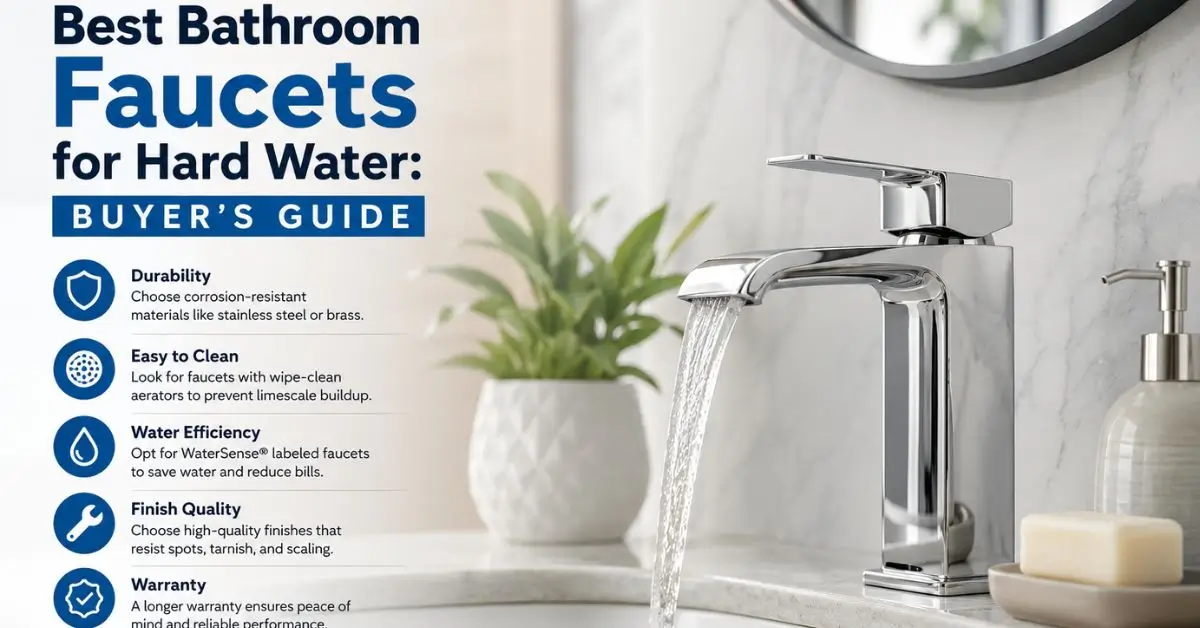
If you live in a hard water area, you already know the frustration. White chalky deposits around your faucet base. Water spots that will not wipe off. A finish that looked great when you installed it but now looks dull and stained just a few months later.
Hard water affects more than just the look of your bathroom. Over time, mineral buildup gets inside faucet valves and aerators, slowing water flow and eventually causing leaks or failure. Replacing a faucet every two or three years because hard water destroyed it is an expensive and avoidable problem.
The good news is that choosing the right faucet from the start makes a real difference. Certain materials, finishes, and internal components hold up significantly better in hard water conditions than others.
This guide will walk you through exactly what to look for when shopping for the best bathroom faucets for hard water, which finishes to choose and which to avoid, and how to keep any faucet lasting longer in a mineral-heavy water supply.
Hard water is water with a high concentration of dissolved minerals, primarily calcium and magnesium. These minerals leave behind limescale and white deposits on faucet surfaces and inside valves over time. Faucets designed or suited for hard water use specific materials, finishes, and internal components that resist corrosion, mineral buildup, and surface damage better than standard options.
Quick Summary
Hard water damages faucets faster than most people expect. The right faucet finish, valve type, and material can dramatically extend lifespan and reduce maintenance. Brushed nickel and stainless steel finishes resist spots best. Ceramic disc valves handle mineral-heavy water better than rubber washers. Spot-resistant coatings are worth paying for. Read on for the full breakdown.
What Hard Water Actually Does to Your Faucet
Understanding the problem helps you make a smarter buying decision. Hard water does not just leave spots on the outside of your faucet. It works on multiple levels simultaneously.
On the surface, dissolved calcium and magnesium leave white or yellowish deposits every time water evaporates. These are the visible water spots and limescale rings you see around the base and spout. On polished chrome finishes, these show up almost immediately and are very difficult to remove without scratching the surface.
Inside the faucet, minerals slowly build up inside the aerator, which is the small screen at the tip of the spout. This restricts water flow over time. Most people notice reduced pressure before they realize what is happening.
Deeper inside the valve cartridge, mineral deposits wear down rubber seals and washers faster than in soft water areas. This leads to dripping faucets, stiff handles, and eventually complete valve failure. A faucet that might last ten years in a soft water home could need replacing in three to five years in a hard water home if the wrong type is chosen.
The Most Important Feature: Finish Type
The finish on your faucet is the first line of defense against hard water damage. Not all finishes are equal, and this is one area where spending a little more upfront saves a lot of maintenance time and money later.
Brushed Nickel
This is consistently the top recommendation for hard water areas. The brushed texture naturally hides water spots and fingerprints because the matte surface does not show reflections the same way polished finishes do. Brushed nickel is also durable and widely available across all price points. It is the safest choice for most homeowners dealing with hard water.
Stainless Steel
Similar benefits to brushed nickel. The matte or satin finish resists showing mineral deposits, and stainless steel as a material is naturally resistant to corrosion. Many quality faucets marketed for kitchen use are stainless steel, but the finish translates well to bathroom faucets too.
Matte Black
Matte black faucets have become very popular in modern bathroom design, and the matte finish does a reasonable job hiding water spots. However, white limescale deposits are very visible against a dark surface, so regular wiping is still necessary. It is not the most practical choice for hard water, though it can work with consistent maintenance.
Polished Chrome
This is the finish to avoid in hard water areas if low maintenance is a priority. Chrome looks excellent when clean, but water spots show up immediately and the polished surface makes them highly visible. Keeping chrome looking good in a hard-water home means wiping it down almost daily.
Polished Brass and Gold
Traditional polished brass and gold finishes face similar challenges to chrome. They look striking but show mineral deposits easily. Brushed gold or unlacquered brass options are more forgiving but still require more maintenance than brushed nickel or stainless in hard water conditions.
Spot-Resistant and Anti-Limescale Coatings
Several major faucet manufacturers now offer proprietary spot-resistant or easy-clean coatings on top of their standard finishes. These are worth knowing about.
Delta’s SpotShield technology is one well-known example. It applies a treated coating over brushed nickel or stainless finishes that actively resists water spots and fingerprints. Moen offers a similar product called Spot Resist. Kohler uses what they call a Vibrant finish system designed for durability against everyday wear including hard water.
These coatings genuinely help. They do not eliminate the need to clean your faucet, but they reduce how often you need to do it and make cleaning easier when you do. If you are buying a faucet for a hard water home, looking for one of these coating options is a smart move.
Valve Type Matters More Than Most People Realize
The valve is the internal mechanism that controls water flow and temperature. In hard water areas, this component takes the most abuse from mineral deposits, and choosing the right valve type extends the life of your faucet significantly.
Ceramic Disc Valves
These are the best choice for hard water. Ceramic discs are extremely hard and smooth, which means mineral deposits have a harder time sticking to or scratching the sealing surfaces. A quality ceramic disc valve can last for decades even in hard water conditions, and it rarely drips.
Ball Valves
Common in single-handle faucets. They use a rotating ball with rubber seats and springs. In hard water areas, mineral deposits can wear the rubber seats faster and cause dripping over time. Ball valves are reliable but require more maintenance in hard-water homes than ceramic-disc options.
Cartridge Valves
These use a replaceable cartridge that controls flow and temperature. Quality cartridges with ceramic internals perform well in hard water. The advantage is that when the cartridge does eventually wear out, replacing it is straightforward and inexpensive compared to replacing the whole faucet.
Compression Valves
Older style valves that use rubber washers pressed against a seat to stop water flow. These are the least suitable for hard water. The rubber wears faster in mineral-heavy water, and compression valves are more prone to dripping. Avoid these if you are buying a new faucet for a hard water area.
Key Features to Look For When Shopping
Beyond finish and valve type, a few other features make a meaningful difference for hard water performance.
Easy-Clean Aerators
Some faucets include aerators that unscrew easily by hand for cleaning, without needing a wrench or special tool. In hard water areas, cleaning the aerator every few months keeps flow rates strong. A faucet with a simple, accessible aerator makes this task much easier.
Solid Brass Construction
The main body of the faucet should be solid brass rather than zinc alloy or plastic. Brass resists corrosion extremely well and does not react negatively with mineral-heavy water over time. Many budget faucets use cheaper zinc alloy bodies that degrade faster in hard water conditions.
WaterSense Certification
This EPA certification indicates the faucet uses no more than 1.5 gallons per minute while maintaining good pressure. Beyond being environmentally responsible, WaterSense faucets use less water overall, which means slightly less mineral deposit buildup over time compared to higher-flow faucets.
Comparing Finish Options for Hard Water
| Finish Type | Spot Visibility | Limescale Resistance | Maintenance Level | Hard Water Rating |
|---|---|---|---|---|
| Brushed Nickel | Low | Good | Low | Excellent |
| Stainless Steel | Low | Good | Low | Excellent |
| Matte Black | Medium | Fair | Medium | Good |
| Brushed Gold | Medium | Fair | Medium | Fair |
| Polished Chrome | High | Poor | High | Poor |
| Polished Brass | High | Poor | High | Poor |
This table gives you a quick reference when comparing faucet options. For most hard-water homes, brushed nickel or stainless steel is the practical starting point.
What to Avoid When Buying for Hard Water
A few common mistakes are worth calling out directly.
Do not buy based on looks alone. Polished finishes look beautiful in the showroom and in product photos. They look terrible three months into life in a hard water home. Choose a finish for your water conditions first, then find a style you like within that category.
Do not ignore the internal valve material. A faucet with a great finish but a cheap rubber-washer compression valve will still give you problems. Ask about the valve type or check the product specifications before buying.
Do not skip brands with warranty support. In hard water areas, faucets work harder. Having a manufacturer that stands behind their product matters. Delta, Moen, and Kohler all offer strong warranties and widely available replacement parts. Lesser-known brands may cost less upfront but offer little support if something goes wrong.
Practical Tips for Maintaining Any Faucet in Hard Water
Even the best bathroom faucets for hard water need some basic maintenance. These habits extend the life of any faucet significantly.
Wipe down the faucet after use with a dry cloth or microfiber towel. This takes ten seconds and prevents water spots from drying and setting on the surface.
Clean the aerator every three to six months. Unscrew it, soak it in white vinegar for thirty minutes, rinse, and reinstall. This keeps your water flow strong and pressure consistent.
Use white vinegar for cleaning mineral deposits. It is safe on most faucet finishes and dissolves limescale effectively without damaging the surface coating. Avoid abrasive cleaners or steel wool, which scratch finishes and make them more prone to future spotting.
Consider a whole-home water softener if your water hardness is extreme. A water softener removes the minerals before they reach your fixtures, which extends the life of every faucet, showerhead, and appliance in your home. In areas like Phoenix, Arizona, or Las Vegas, where water hardness regularly exceeds 200 parts per million, a softener often pays for itself quickly in reduced fixture replacement costs.
Conclusion
Choosing the right faucet for a hard water home is not complicated, but it does require paying attention to the right details. Finish, valve type, and material matter far more than brand name or price tag alone.
Start with brushed nickel or stainless steel. Choose a ceramic disc valve. Look for solid brass construction and a spot-resistant coating if your budget allows. Follow basic maintenance habits, and your faucet will look good and perform well for years instead of months.
If you found this helpful, take a look at our related guides on how to remove limescale from bathroom fixtures and choosing the right water softener for your home. Both cover the next practical steps for managing hard water throughout your bathroom.
Frequently Asked Questions
What is the best faucet finish for hard water?
Brushed nickel is the top choice. Its matte texture hides water spots naturally and holds up well against mineral deposits. Stainless steel is equally good. Both are widely available and suit most bathroom styles.
Do spot-resistant faucet coatings actually work?
Yes, they do. Coatings like Delta’s SpotShield and Moen’s Spot Resist actively repelling water spots and make cleaning easier. They do not eliminate maintenance entirely, but they make a real difference in hard water homes.
How do I know if I have hard water?
Look for white or yellowish deposits around faucets, spots on glassware, and soap that does not lather well. Confirm it with an inexpensive water test kit from a hardware store, or check your city’s annual water quality report.
What type of faucet valve lasts longest in hard water?
Ceramic disc valves. The ceramic surface resists mineral buildup better than rubber washers and can last twenty years or more even in hard water conditions.
Should I get a water softener or just buy a better faucet?
Both help but in different ways. A better faucet handles hard water at the fixture level. A water softener protects everything in your home. If your water is very hard, combining both is the smartest long-term solution.