

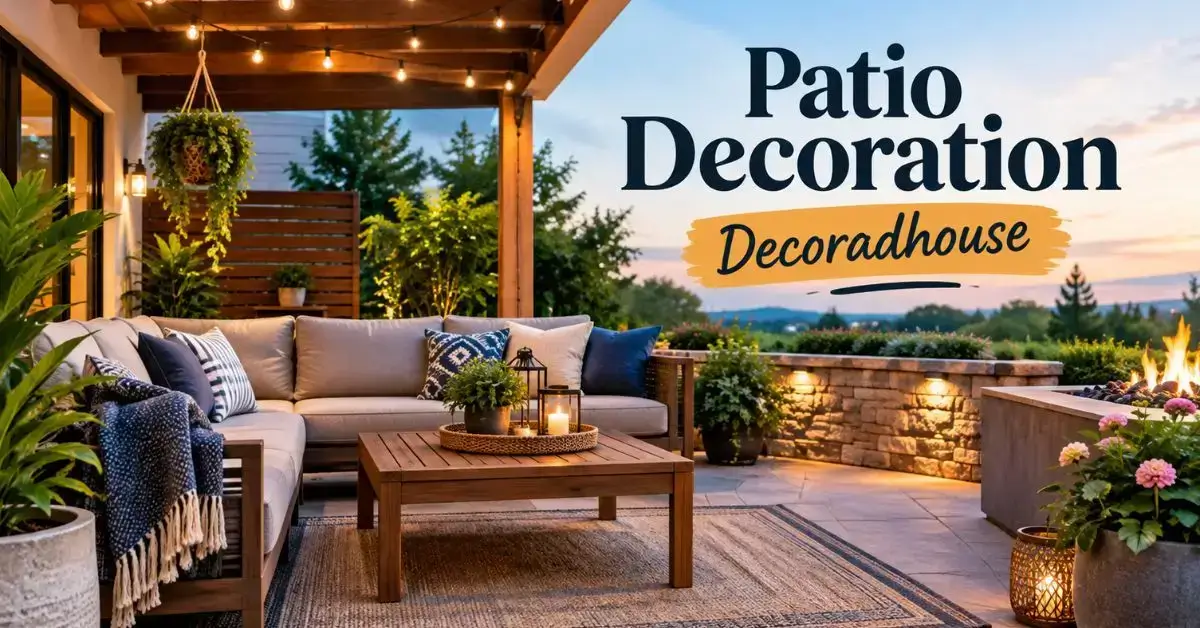
Patio Decoration Decoradhouse: How to Style a Cozy Outdoor Living Space
Stepping out onto your back patio should feel like entering a private outdoor retreat. It is the perfect place to enjoy your morning coffee, read a good book, or host weekend barbecues with family and friends.
However, many homeowners and renters end up with an outdoor space that feels neglected. Bare concrete slabs, weathered plastic chairs, and harsh outdoor floodlights often turn patios into empty storage zones rather than relaxing living areas. People often assume that transforming an outdoor area requires thousands of dollars in construction.
Creating an inviting backyard space is much easier and more affordable than you think. By following the proven styling principles of patio decoration decoradhouse guides, you can turn any basic porch, deck, or backyard slab into a stylish open-air room. This guide explains how to arrange your layout, choose weather-resistant furniture, layer warm evening lighting, and add decorative touches that bring indoor comfort outside.
The concept of patio decoration decoradhouse refers to practical outdoor design methods, furniture layouts, and styling techniques used to transform residential patios into functional living spaces. It focuses on using weather-resistant textiles, layered ambient lighting, container plants, and multi-functional outdoor furniture to create a comfortable, stylish environment without needing expensive full-scale backyard remodeling.
Quick Summary
Styling a great patio comes down to four basic steps. Treat your patio like an indoor room by laying down an outdoor rug, creating distinct seating or dining zones, hanging warm string lights, and mixing hardy potted plants. Choose weather-resistant materials like aluminum or teak to ensure your setup lasts through every season.
The Core Fundamentals of Outdoor Living Space Design
Professional designers approach outdoor spaces the same way they design indoor living rooms. When an outdoor space has clear boundaries, balanced proportions, and comfortable seating, it immediately feels welcoming.
Before buying any new decor pieces, keep three basic fundamentals in mind:
Define Functional Activity Zones
Decide how you want to use your patio most often. If you love outdoor dining, center your layout around a dining table and comfortable chairs. If you prefer quiet lounging, prioritize a deep outdoor sofa, an accent chair, and a low coffee table.
Create Visual Boundaries with Outdoor Rugs
An outdoor area rug is the fastest way to make a cold concrete slab or wood deck feel like an authentic room. A rug anchors your furniture grouping and provides a soft, clean surface for bare feet.
Maintain Clear Walking Pathways
Always leave at least three feet of open walking space between furniture pieces, doorways, and grilling areas. A crowded patio makes moving around difficult and feels cluttered.
Choosing Weather-Resistant Furniture That Lasts
Outdoor furniture faces continuous sun exposure, rain, wind, and temperature swings. Selecting materials designed for the outdoors saves you money by preventing rust, fading, and wood rot.
Applying practical patio decoration decoradhouse recommendations starts with picking durable base materials that match your local climate.
Powder-Coated Aluminum
Aluminum is lightweight, rust-proof, and easy to move around your patio. Powder-coated finishes protect the metal from chipping and weather damage. It is an ideal choice for humid or rainy regions because it never rusts.
The only minor drawback is that lightweight aluminum chairs can blow over in areas with extreme high winds unless placed near a protective wall.
Grade-A Teak Wood
Teak is the gold standard for natural wooden outdoor furniture. It contains high levels of natural oils and rubber that naturally repel water, rot, and insects.
Untreated teak gradually turns a silvery-gray patina over time, which many homeowners love. If you prefer the original golden honey color, applying a coat of teak sealer once a year preserves the finish.
All-Weather Resin Wicker
Traditional organic wicker unravels quickly when left in the rain. Modern outdoor wicker is made from high-density polyethylene (HDPE) resin woven over a sturdy aluminum frame.
Resin wicker delivers a classic, textured appearance while resisting moisture, mildew, and ultraviolet sun damage.
Solution-Dyed Acrylic Fabrics
Never use indoor fabric cushions on an outdoor patio. Look for outdoor cushions made with solution-dyed acrylic fabrics (such as Sunbrella).
In solution-dyed fabrics, the color pigment is added to the liquid fiber before it is spun into yarn. This process makes the fabric exceptionally resistant to fading in direct sunlight and allows for easy cleaning with mild soap and water.
Layered Outdoor Lighting for Evening Ambience
Good lighting completely transforms an outdoor patio once the sun goes down. A single harsh floodlight mounted to your back wall ruins the cozy atmosphere and blinds your guests.
To create an inviting evening mood, combine three layers of warm outdoor lighting:
Overhead String Lights
Warm-white Edison bulb string lights (around 2200K to 2700K color temperature) are the ultimate outdoor mood creator. Hang them in a zig-zag pattern across a pergola, attach them to wooden posts, or string them along the roofline.
Look for commercial-grade string lights with shatterproof LED bulbs and waterproof rubber sockets to withstand heavy rainstorms.
Tabletop and Floor Lanterns
Place solar-powered or battery-operated LED lanterns on coffee tables, side tables, and along patio steps. Grouping two or three lanterns of different heights in a corner creates a soft, flickering glow that adds visual depth.
Low-Voltage Landscape Accents
Use small solar uplights or low-voltage landscape spotlights to illuminate nearby trees, tall grasses, or architectural garden walls behind your patio. Lighting the perimeter of your yard draws the eye outward, making your entire outdoor living area feel much larger at night.
Realistic US Example: A $420 Suburban Patio Refresh
Consider a homeowner in Columbus, Ohio with a standard 12×14 foot poured concrete backyard patio. The space was rarely used because it had only two rusted metal folding chairs and no shade or privacy.
Using the step-by-step concepts found in patio decoration decoradhouse tutorials, the homeowner completed four budget-friendly updates over a single weekend:
- Placed a neutral 8×10 foot geometric polypropylene outdoor rug over the bare concrete ($110).
- Purchased a 4-piece all-weather resin wicker conversation set with thick water-resistant cushions from a local home improvement store sale ($220).
- Strung two sets of shatterproof commercial outdoor LED string lights from the roofline to two wooden planter posts ($45).
- Added three terracotta planters filled with lavender, sweet potato vine, and fountain grass for natural greenery ($45).
The Result:
For a total cost of $420, the plain concrete slab became an inviting outdoor living room. The family began using the patio every evening for dinner and relaxation throughout spring, summer, and fall.
Comparing Outdoor Decor Materials
Choosing the right materials ensures your patio items look great and survive outdoor weather conditions. Here is a practical comparison of common outdoor furniture and decor materials.
| Material Type | Durability Level | Maintenance Needs | Weather Resistance | Best Climate Fit |
|---|---|---|---|---|
| Powder-Coated Aluminum | Very High | Very Low (Wipe clean) | Completely rust-proof | Rainy, humid, and coastal areas |
| Grade-A Teak Wood | Excellent | Low to Moderate (Annual seal) | Resists rot, water, and pests | All climates (Hot or cold) |
| HDPE Resin Wicker | High | Low (Hose down) | UV and mildew resistant | Moderate to sunny climates |
| Wrought Iron | Very High | Moderate (Check for rust) | Heavy (Wind resistant) | Windy plains and open yards |
| Polypropylene Rugs | High | Very Low (Hose clean) | Dries fast, mold resistant | All outdoor patio settings |
| Standard Pine Wood | Low to Moderate | High (Needs regular paint) | Prone to rot if unsealed | Covered porches only |
Adding Textiles, Pillows, and Ground Cover
Textiles introduce color, pattern, and softness to hard outdoor surfaces. They turn stiff outdoor chairs into comfortable lounging spots where you can relax for hours.
Master the Mix of Outdoor Accent Pillows
Outdoor throw pillows are an easy, inexpensive way to update your patio style every season. Use the standard interior styling formula:
- Two Large Solid Pillows: Use a durable, neutral base color (like cream, charcoal, or navy) in a 20×20 inch size placed in the sofa corners.
- Two Patterned Pillows: Layer smaller 18×18 inch pillows featuring stripes, botanical prints, or geometric shapes that share your accent color.
- One Lumbar Pillow: Add a textured rectangular pillow in the center of the sofa for lower back support and visual balance.
Hang Outdoor Privacy Curtains
If your patio sits close to neighboring houses, hanging outdoor curtains creates instant privacy and soft shade.
Use lightweight, mold-resistant outdoor curtain panels mounted on a galvanized metal rod beneath a pergola or porch ceiling. Tie them back to posts with natural jute rope when not in use.
Layer a Textured Throw Blanket
Keep a basket of lightweight, washable outdoor blankets near your patio door. When evening temperatures drop, wrapping up in a soft blanket lets you enjoy your outdoor space well into the cooler autumn months.
Container Gardening and Greenery Styling
Plants bring life, color, and fresh scents to your outdoor living area. Even if you do not have a large yard, container gardening lets you surround your seating area with lush foliage.
Use the Thriller, Filler, Spiller Formula
When designing large plant pots for your patio corners, professional gardeners use a simple three-plant arrangement rule:
- The Thriller (Height): A tall, striking plant placed in the center or back of the pot. Examples include ornamental grasses, dwarf palms, or canna lilies.
- The Filler (Volume): Medium-height plants that fill in the middle space with bushy foliage and flowers. Examples include geraniums, coleus, or lantana.
- The Spiller (Drape): Trailing plants that cascade down the sides of the pot to soften the edges. Examples include creeping Jenny, sweet potato vine, or trailing petunias.
Create a Vertical Herb Garden
If your patio is compact, take advantage of vertical wall space. Mount wooden planter boxes or a hanging pocket planter on a sunny exterior wall.
Plant fresh culinary herbs like basil, rosemary, mint, and thyme. They look beautiful, smell wonderful, and provide fresh ingredients for summer cooking and grilling.
Build Natural Privacy Screens with Tall Planters
Place a row of tall, rectangular trough planters along the open edge of your patio. Planting tall, upright varieties like snake plants, bamboo, or arborvitae creates a living privacy hedge that blocks the view of neighboring yards.
Incorporating smart greenery ideas from patio decoration decoradhouse guides ensures your patio feels connected to nature.
Shade and Weather Protection Strategies
Enjoying your patio during hot summer afternoons requires reliable shade. Direct sunlight can make outdoor spaces uncomfortably hot within minutes.
Triangle and Rectangle Shade Sails
Shade sails are durable fabric canopies that stretch between house eaves, trees, or sturdy wooden posts. They block up to ninety percent of harmful UV rays while allowing cool breezes to pass through.
They are an affordable, modern alternative to permanent roof structures and can be taken down easily before winter storms.
Cantilever Patio Umbrellas
A cantilever umbrella features an offset base and an adjustable hanging canopy. Unlike traditional center-pole table umbrellas, a cantilever umbrella covers an entire conversation seating area without an awkward pole blocking sightlines in the middle.
Look for models with a sturdy 360-degree rotating base and heavy-duty sand or water fill weights to prevent tipping in sudden gusts of wind.
Common Outdoor Decorating Mistakes to Avoid
Avoiding common outdoor styling pitfalls saves you money and ensures your patio remains functional year-round.
Mistake 1: Leaving Cushions Unprotected in the Rain
Even water-resistant outdoor cushions will soak up moisture during heavy downpours, leading to mold and mildew inside the foam core. Store cushions inside a weather-proof deck box or cover your furniture with fitted covers when heavy rain is forecasted.
Mistake 2: Buying Fragile Glass Centerpieces
Lightweight glass vases and delicate ceramic figurines can blow over and shatter in strong winds. Use sturdy wooden bowls, heavy concrete planters, or durable metal candle lanterns for outdoor tabletop decor.
Mistake 3: Choosing Furniture That Is Too Large
A massive seven-piece sectional sofa will swallow a small 10×10 foot patio, leaving no room to walk. Always measure your outdoor floor area and sketch a simple layout before buying large furniture pieces.
Mistake 4: Forgetting Outdoor Heating Elements
Many people only use their patios for three months during mid-summer. Adding an affordable propane fire pit table or a standing patio heater extends your outdoor season by several months into the spring and fall.
Step-by-Step Weekend Patio Makeover Plan
If your patio needs a complete refresh, follow this practical four-step implementation plan.
Step 1: Deep Clean the Surface
Sweep away all debris, leaves, and cobwebs. Use a pressure washer or a stiff bristle scrub brush with mild outdoor cleaner to remove built-up dirt, algae, and mildew from your concrete, stone, or wood deck.
Step 2: Lay the Groundwork
Roll out a weather-resistant polypropylene outdoor area rug in the center of your primary activity zone to establish your visual foundation.
Step 3: Arrange Core Seating
Position your main outdoor sofa or dining set facing outward toward your garden, yard, or focal point. Ensure all chairs sit comfortably on or near the rug edges with clear walkways.
Step 4: Add Lighting, Textiles, and Plants
Hang overhead string lights, place colorful outdoor accent pillows on the seating, and set potted container plants in corners and along steps.
Following this structured process turns any neglected backyard area into a functional, beautiful retreat.
Conclusion
Your patio is a valuable extension of your home. With thoughtful planning, good lighting, and weather-resistant materials, you can create an inviting open-air oasis that you and your family will enjoy for years to come.
By applying the straightforward principles found in patio decoration decoradhouse resources, you do not need a massive budget to make a dramatic difference. Focus on comfort, define your activity zones, choose durable outdoor fabrics, and surround yourself with warm lighting and lush greenery.
Pick one small update to tackle this weekend. Wash down your patio surface, hang a strand of warm string lights, or plant a colorful flower container. Step by step, you will build an outdoor living space that brings relaxation and joy to your everyday life.
If you found this outdoor styling guide helpful, explore our comprehensive guide on choosing the best weather-resistant outdoor furniture materials, and read our practical tutorial on DIY container gardening for small backyards.
Frequently Asked Questions
What are the most important patio decoration decoradhouse tips for beginners?
Start with an outdoor rug, weather-resistant seating, and warm string lights. Add potted plants and outdoor cushions for extra comfort.
How do I clean and maintain an outdoor area rug?
Sweep off dirt, hose the rug, and scrub stains with mild soap and a soft brush. Let it dry fully on both sides before putting it back.
How can I make a small patio feel bigger?
Use a light-colored rug, slim open-frame furniture, vertical planters, and edge lighting. Keep walkways clear to create more visual space.
Can I leave outdoor furniture outside during winter?
Powder-coated aluminum and teak can usually stay outside with waterproof covers. Store cushions, rugs, and delicate decor in a dry area during freezing weather.
How do I keep bugs and mosquitoes away from my patio?
Remove standing water, use an outdoor fan near seating, and consider citronella candles. Keep plants and patio areas clean to reduce pest activity.