

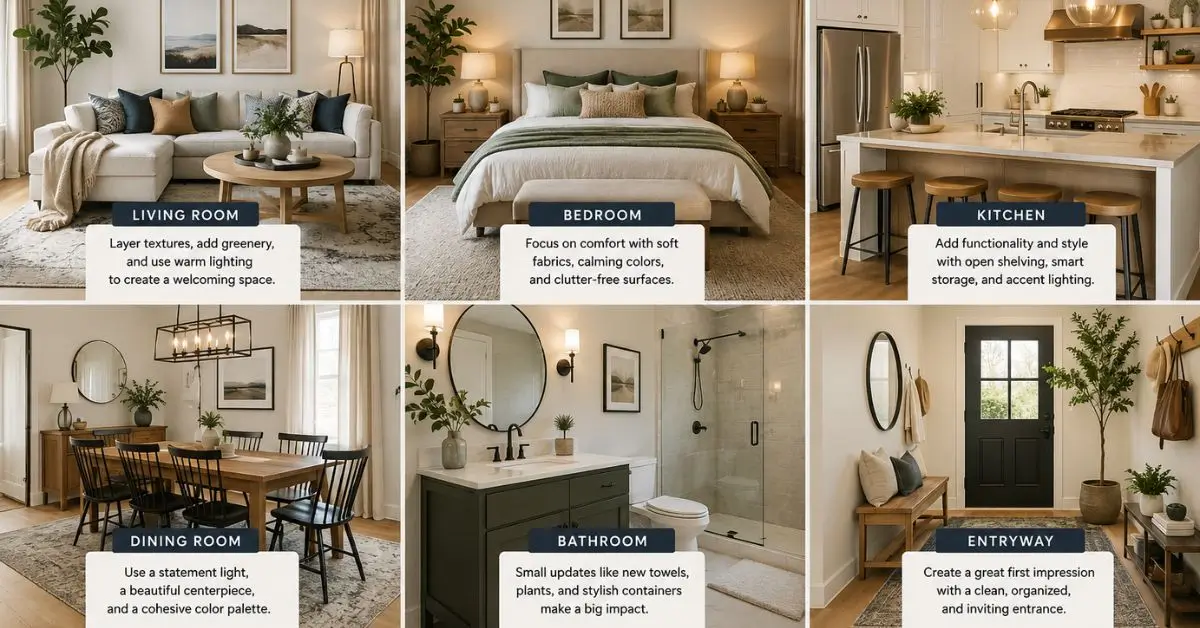
Home Decor Ideas
Most people don’t struggle with finding decor inspiration; they struggle with knowing what to actually do with it.
You save ideas on Pinterest. You browse Instagram. You walk through a furniture store and think, “Yes, that’s exactly what I want.” Then you get home, look at your space, and have no idea where to begin.
The problem isn’t inspiration. It’s having a clear, practical plan that works for your actual home, your actual budget, and your actual lifestyle.
This guide gives you that. Room by room, style by style, real home decor ideas that are easy to understand, honest about cost, and simple enough to actually follow through on.
Home decor ideas are creative and practical approaches to improving the look, feel, and function of living spaces. They cover everything from choosing the right colors and furniture arrangement to adding lighting, textiles, and personal touches that reflect your style. Good decor doesn’t just look good; it makes your home more comfortable and livable every day.
Quick Summary
Good home decor starts with a plan, not a shopping cart. Focus on one room at a time, work with what you have before buying new things, and prioritize changes that improve both look and function. This guide walks you through every major room with practical, budget-aware advice.
Why Home Decor Matters Beyond Just Looks
A well-decorated home isn’t about impressing guests. It’s about how you feel in your own space every single day.
Research consistently shows that our physical environment affects mood, focus, and stress levels. A cluttered, poorly lit room genuinely makes you feel worse. A clean, thoughtfully decorated space makes you feel calmer and more in control.
Beyond personal well-being, smart decorating also adds real value to your home. According to the National Association of Realtors, staged and well-presented homes sell faster and often for higher prices than unstaged ones.
So whether you’re decorating for yourself or with resale in mind, putting thought into your home’s interior pays off in real, measurable ways.
Start Here: The Basics Before You Decorate Anything
Before you buy a single item, get these three things right.
1. Define your style.
You don’t need to label it perfectly; just know the general direction. Do you want warm and cozy? Clean and minimal? Bright and bold? Having a clear direction stops you from buying things that don’t work together.
2. Work with your light.
Natural light changes everything. A color that looks perfect in a well-lit showroom can look completely different in your north-facing bedroom. Always test paint colors and fabrics in your actual space before committing.
3. Declutter before you decorate.
This is the most overlooked step. Adding new decor to a cluttered room doesn’t improve it; it adds noise. Clear the space first, then decide what it actually needs.
Living Room Decor Ideas
The living room is usually the first space guests see and the room where your family spends the most time. Getting it right matters.
Anchor the Room With a Rug
A well-chosen area rug is one of the most powerful decorating tools in any room. It defines the seating area, adds warmth, and pulls the whole space together visually.
The most common mistake is choosing a rug that’s too small. In a living room, the front legs of all your main furniture pieces should sit on the rug. When in doubt, go larger.
Layer Your Lighting
Most living rooms rely on a single overhead light. That’s one of the biggest reasons rooms feel flat and uninviting.
Layer your lighting instead:
- Ambient light: your main overhead source
- Task light: a floor lamp near a reading chair
- Accent light: table lamps, LED strips behind a TV, or candles
Adding a dimmer switch to your overhead light costs around $20–$30 and immediately gives you more control over the mood of the room.
Use a focal point.
Every well-decorated living room has one strong focal point: a fireplace, a large piece of art, a feature wall, or a statement sofa. Everything else in the room should complement that focal point, not compete with it.
If your room doesn’t have a natural focal point, create one. A large framed print or a gallery wall above the sofa works well and costs very little if you DIY it.
Kitchen Decor Ideas
Kitchens are functional spaces first but that doesn’t mean they have to feel cold or boring.
Add Open Shelving
Replacing one or two upper cabinet doors with open shelves instantly makes a kitchen feel more open and styled. Display items you actually use: nice dishes, a few cookbooks, and some small plants.
This works especially well in smaller kitchens where closed cabinets can feel heavy and cramped.
Bring in Plants or Fresh Herbs
A small herb garden on the windowsill, basil, rosemary, and mint add color, freshness, and actual functionality to it. It costs almost nothing and makes a kitchen feel genuinely alive.
Update Small Details
You don’t need to renovate to refresh a kitchen. Replacing cabinet hardware, adding a simple backsplash, or swapping out an old faucet for a modern matte black or brushed nickel finish makes a significant visual difference for a few hundred dollars.
A homeowner in Seattle recently updated their kitchen cabinet handles and replaced the faucet for around $280 total. The kitchen looked noticeably more modern without touching anything structural.
Bedroom Decor Ideas
Your bedroom should feel like a retreat. Calm, comfortable, and genuinely relaxing.
Get Your Color Right
Bedroom color has a direct impact on sleep quality and how rested you feel. Soft, muted tones warm whites, soft greiges, dusty blues, and sage greens consistently perform better than bold or bright colors in sleeping spaces.
If you love color, use it in accents, throw pillows, a blanket, or artwork rather than on all four walls.
Invest in Good Bedding
Your bed is the centerpiece of the room. Good quality bedding a well-fitted duvet cover, quality pillowcases, and a throw blanket makes the entire room look more pulled together and feels significantly better to sleep in.
You don’t need to spend a fortune. Mid-range bedding from brands like Parachute or even well-chosen options from Target can look and feel excellent.
Create a Headboard Moment
If your bed doesn’t have a headboard, adding one immediately makes the room feel more finished and designed. Options range from affordable upholstered headboards ($100–$300) to DIY versions using reclaimed wood or fabric panels.
Bathroom Decor Ideas
Bathrooms are small spaces where detail matters enormously. Small changes here have a big visual impact.
Replace Builder-Grade Mirrors
The plain rectangular mirror that comes with most builder-grade homes is one of the easiest things to upgrade. A framed mirror round, arched, or with a decorative edge makes the bathroom feel intentional and styled.
Most good options cost between $50 and $200 and install in under an hour.
Add Texture With Towels and Mats
Rolled towels in a basket, a quality bath mat, and a simple tray on the vanity are low-cost touches that make a bathroom feel more like a boutique hotel and less like a utility room.
Use greenery.
Even artificial plants work well in bathrooms with low light. A small trailing plant on a shelf or a succulent on the vanity adds life to what is often a very sterile space.
Entryway Decor Ideas
The entryway sets the tone for your entire home. It’s the first thing you see when you walk in and the last thing you see when you leave.
Keep it functional and welcoming:
- A console table with a mirror above it creates a classic, timeless look
- Hooks for coats and bags keep clutter off the floor
- A small tray or bowl near the door catches keys, mail, and everyday items
- Good lighting makes a narrow entryway feel larger and more inviting
Even a very small entryway benefits from one piece of art or a mirror that reflects light and creates a sense of depth.
Budget-Friendly Decor Ideas That Look Expensive
Good decorating doesn’t require a large budget. These ideas consistently deliver high visual impact at low cost:
| Idea | Approximate Cost | Impact Level |
|---|---|---|
| Fresh paint (one room) | $50–$150 | Very High |
| New throw pillows | $30–$80 | High |
| Framed art prints (DIY gallery wall) | $20–$100 | High |
| Swapping light switch covers | $5–$15 | Medium |
| Adding indoor plants | $10–$40 | High |
| New cabinet hardware (kitchen/bath) | $30–$100 | High |
| Decluttering and reorganizing | $0 | Very High |
The most underrated item on this list is the last one. A decluttered, well-organized room always looks better regardless of what’s in it.
Decorating Mistakes to Avoid
Even people with good taste make these common errors.
Hanging art too high. Art should be hung at eye level roughly 57–60 inches from the floor to the center of the piece. Most people hang it too high, which makes rooms feel disconnected.
Matching everything too perfectly. A room where every piece matches exactly feels staged rather than lived-in. Mix textures, tones, and styles within a consistent color palette for a more natural result.
Ignoring scale. A tiny sofa in a large room looks lost. A massive wardrobe in a small bedroom feels suffocating. Always consider scale before buying furniture.
Decorating all at once. Buying everything for a room in one trip rarely works well. Build a room gradually, live in it, and add pieces as you find the right ones.
Frequently Asked Questions
What are the best budget-friendly home decor ideas?
Paint, plants, and throw pillows are affordable ways to refresh any space quickly.
How do I choose a decorating style?
Look at spaces you love and find common themes. Stick to one style when buying decor.
Which rooms should I decorate first?
Start with the living room and bedroom since they impact daily comfort the most.
How can I make a small room look bigger?
Use light colors, mirrors, and simple furniture to create a more open feel.
How often should I update home decor?
Refresh small decor items every 1–2 years and larger updates every 5–10 years.