

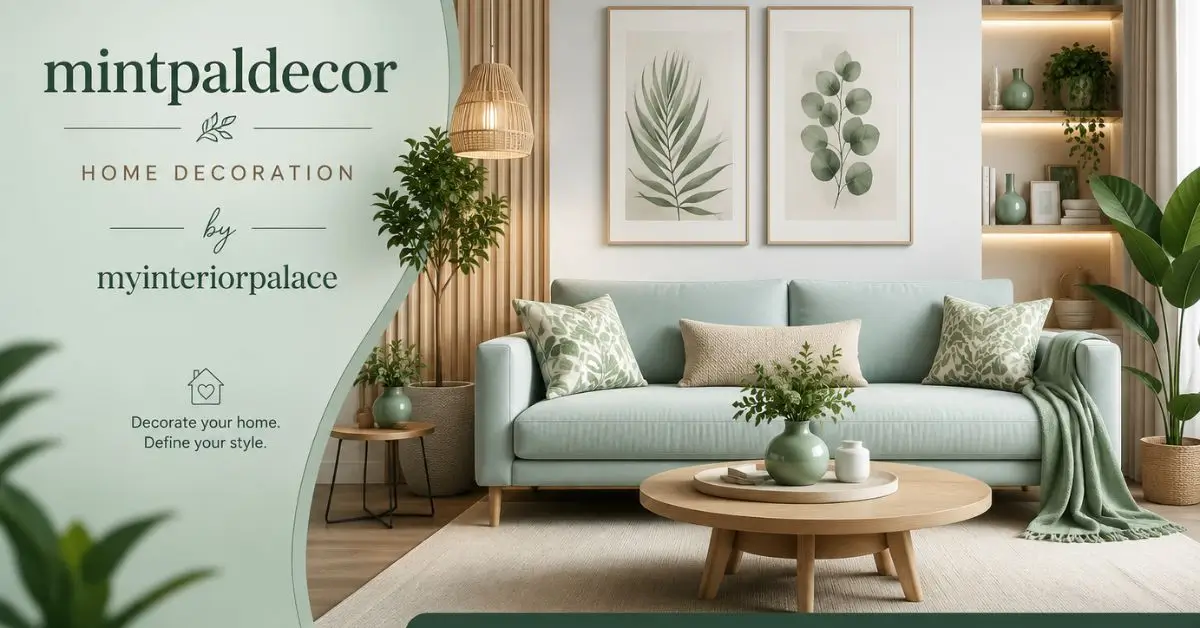
Introduction
Most people want a home that feels intentional, comfortable, and visually appealing. But turning that desire into reality is harder than it looks. Without a clear starting point, decorating a home often becomes a series of impulse purchases that never quite come together the way you imagined.
That is exactly the problem that platforms like MintPalDecor and MyInteriorPalace are built to solve. They bring structure, inspiration, and practical guidance to the home decoration process so that homeowners can make confident, informed decisions rather than guessing their way through it.
If you are looking for a clear understanding of what mintpaldecor home decoration by myinteriorpalace offers and how to apply those ideas to your own home, this guide covers everything in one place.
Home decoration is the process of enhancing the interior of a living space through the thoughtful selection and arrangement of furniture, color, lighting, textiles, and decorative objects. The goal is to create a space that reflects the owner’s personality while remaining functional, comfortable, and visually balanced. Good home decoration improves daily life in ways that go beyond just how a room looks.
Quick Summary
MintPalDecor home decoration by MyInteriorPalace is a practical, design-focused resource that helps homeowners create beautiful, functional spaces. This guide explains what it offers, how to use those ideas room by room, and what decoration principles make the biggest real-world difference.
What MintPalDecor and MyInteriorPalace Bring to Home Decoration
There are thousands of home decoration resources online. What separates useful ones from generic ones is specificity, practicality, and a clear point of view.
MintPalDecor, as presented through MyInteriorPalace, focuses on making home decoration accessible to real homeowners rather than only design professionals. The approach centers on principles that work across different home sizes, budgets, and personal styles rather than pushing a single rigid aesthetic.
This matters because most people decorating their homes are not starting from scratch with unlimited budgets. They are working with existing furniture, limited space, and a desire to make meaningful improvements without a complete overhaul. Practical decoration guidance that meets people where they are is far more valuable than inspiration that requires a $50,000 renovation budget.
The content and ideas coming from mintpaldecor home decoration by myinteriorpalace are built around this reality. The focus is on principles, decisions, and changes that make a genuine difference in how a home looks and feels.
The Foundation: Understanding What Makes a Room Work
Before thinking about specific decor pieces, colors, or furniture, it helps to understand what actually makes a decorated room feel successful. Most people focus on individual items when the real work is about how those items relate to each other.
Balance is the starting point. A room feels balanced when the visual weight is distributed across the space without one side or area overwhelming another. This does not mean everything needs to be perfectly symmetrical. It means no single element dominates while the rest of the room feels empty or unfinished.
Scale is equally important and one of the most common sources of decorating mistakes. Furniture that is too large makes a room feel crowded. Furniture that is too small looks lost. Every piece you add to a room should relate proportionally to the size of the space and the other pieces around it.
Focal point gives the eye a place to land when someone enters the room. In a living room, it might be a fireplace, a large window, or a statement sofa. In a bedroom, it is almost always the bed. Decoration should support and frame the focal point rather than compete with it.
These three principles underpin every decorating decision worth making, and they are central to the home decoration approach promoted through MintPalDecor.
Color: The Most Powerful Decoration Tool You Have
Color changes everything. It affects how large a room feels, how warm or cool the atmosphere is, and how much energy or calm the space conveys. Getting color right is one of the highest-impact decoration decisions any homeowner can make.
The most reliable approach is the 60-30-10 rule. Choose a dominant color that covers about 60% of the room, a secondary color for about 30%, and an accent color for the remaining 10%. This creates visual interest without visual chaos.
For example, a living room in a suburban Chicago home might use a warm off-white for 60% of the walls and large furniture pieces, a soft sage green for 30% in curtains and accent chairs, and a deep terracotta for 10% in throw pillows, a vase, and a small piece of art. The result feels layered and intentional without requiring a designer’s eye to execute.
Neutral palettes are forgiving and timeless. Bolder color choices work well as accents rather than dominant tones in most homes. If you are unsure, start neutral and add color through accessories and textiles. It is much easier to swap a throw pillow than to repaint a room.
Furniture Arrangement: Why Placement Matters as Much as the Pieces
One of the most overlooked aspects of home decoration is furniture arrangement. People spend considerable money on good furniture and then arrange it in ways that make the room feel awkward, disconnected, or difficult to move through.
The most common mistake is pushing all furniture against the walls. This creates a wide-open center that looks and feels like a waiting room rather than a comfortable living space. Pulling furniture slightly away from walls and creating a conversation grouping in the center of the room immediately makes the space feel more intimate and purposeful.
Area rugs help define zones within a room and anchor furniture groupings. A rug that is too small floats disconnectedly under the furniture. A properly sized rug, where the front legs of all major seating pieces rest on it, ties everything together and signals to anyone entering the room that this is a thoughtfully arranged space.
Traffic flow matters too. You should be able to move through the room without navigating around furniture. A standard clearance of about 18 inches between a coffee table and a sofa, and at least 36 inches for main walkways, keeps the room functional as well as attractive.
Lighting: The Element That Changes Everything
Lighting is consistently undervalued in home decoration conversations. Most homeowners treat it as a practical necessity rather than a design tool, and that is a missed opportunity.
Every room benefits from three types of lighting working together. Ambient lighting provides general illumination, usually from a ceiling fixture. Task lighting focuses on specific activities, like a reading lamp or under-cabinet kitchen lights. Accent lighting highlights features or decor, like a wall sconce beside a piece of art.
When a room relies on a single overhead light source, it tends to feel flat and institutional. Adding a floor lamp in one corner, table lamps on either side of a sofa, and perhaps a small spotlight on a bookshelf completely transforms the atmosphere of the same room without changing a single piece of furniture.
Dimmer switches are one of the best low-cost improvements available to any homeowner. The ability to shift a room from bright and practical to soft and relaxed changes how the space is experienced at different times of day and for different purposes.
Textiles and Texture: How Layers Create Warmth
A room with good furniture and good color can still feel cold and flat if it lacks textural variety. Textiles and mixed materials are what give a space warmth, depth, and the sense that real people live there.
The goal is deliberate contrast. Combine soft and rough surfaces, matte and reflective finishes, natural and manufactured materials. A linen sofa with a wool throw, a jute rug under a glass coffee table, velvet cushions beside ceramic accent pieces. These combinations create the kind of visual richness that photographs well and feels genuinely inviting in person.
The home decoration approach promoted through mintpaldecor home decoration by myinteriorpalace consistently emphasizes this layering principle because it is one of the most effective ways to elevate a space without major investment. A well-chosen throw blanket or a set of textured cushions costs very little but makes a room feel significantly more finished.
Room-by-Room Decoration Priorities
Different rooms have different functional demands, which means decoration decisions should shift depending on the space.
Living Room: Focus on a clear focal point, a properly sized rug, layered lighting, and a cohesive color palette. This is where most decoration energy pays off most visibly.
Bedroom: Prioritize comfort and calm. A quality bed with layered bedding, blackout curtains, and soft lighting creates an environment that promotes rest. Keep decor minimal and personally meaningful.
Kitchen: Functional and clean. Decoration here means clear countertops with a few well-chosen items, good lighting over work surfaces, and perhaps a small plant or interesting container for utensils. Do not overcrowd the space.
Home Office: Balance function and inspiration. A clean desk, good task lighting, and one or two pieces of art or meaningful objects keep the space productive without being sterile.
Entryway: This is the first impression of your home. A mirror, a small table or console, and a place to hang keys or coats make the space both functional and welcoming. It does not need to be large to be impactful.
Helpful Guide: Decoration Priorities by Room
| Room | Top Priority | Key Decoration Element | Common Mistake |
|---|---|---|---|
| Living Room | Balance and comfort | Properly sized area rug | Rug too small for the seating group |
| Bedroom | Rest and calm | Layered bedding and lighting | Too much visual clutter on surfaces |
| Kitchen | Function and cleanliness | Clear counters, good task lighting | Over-decorating a functional space |
| Home Office | Focus and comfort | Task lighting and minimal decor | Poor lighting causing eye strain |
| Entryway | First impression | Mirror, console, coat hooks | Leaving the space bare or overcrowded |
| Bathroom | Clean and calm | Quality towels, one accent piece | Mixing too many colors or styles |
Small Changes That Make a Big Difference
Not every decoration improvement requires a major project or significant spending. Some of the most effective changes are small, inexpensive, and easy to execute.
Replacing outdated light switch covers and outlet plates costs almost nothing but instantly makes a room look more finished. Swapping cheap curtain rods for something more substantial changes how window treatments appear. Hanging curtains higher than the window frame and extending them wider makes windows look larger and ceilings feel taller.
Adding a large mirror to a small room reflects light and creates the illusion of more space. Grouping small decor objects in odd numbers, typically threes or fives, looks more natural and intentional than even groupings. These are the kinds of practical details that separate a decorated room from a furnished one.
Conclusion
Good home decoration is not about following trends or spending large amounts of money. It is about understanding a few core principles and applying them with intention. Balance, scale, color, lighting, and texture are the tools. The space you have and the life you live in it are the context.
The approach promoted through mintpaldecor home decoration by myinteriorpalace is grounded in this practical reality. It is designed to help real homeowners make better decisions, not to sell a lifestyle that most people cannot afford or sustain.
If you want to continue improving your home, explore our guide on how to choose furniture that works for your space or our practical breakdown of the best lighting upgrades for any room. Both offer the same kind of honest, actionable advice that makes a real difference.
Frequently Asked Questions
What is the best way to start decorating a home?
Begin with the room you use most. Choose key pieces like the sofa, rug, and color palette before adding accessories.
How do I decorate a small home effectively?
Use light colors, multifunctional furniture, mirrors, and vertical storage to maximize space.
How much should I budget for home decoration?
Invest more in everyday furniture like sofas and save on decorative accessories. A balanced budget works best.
How do I choose a color palette?
Pick one favorite color, follow the 60-30-10 rule, and test paint samples before committing.
Can I mix different decorating styles?
Yes. Blend styles using a consistent color palette, materials, or overall theme for a cohesive look.